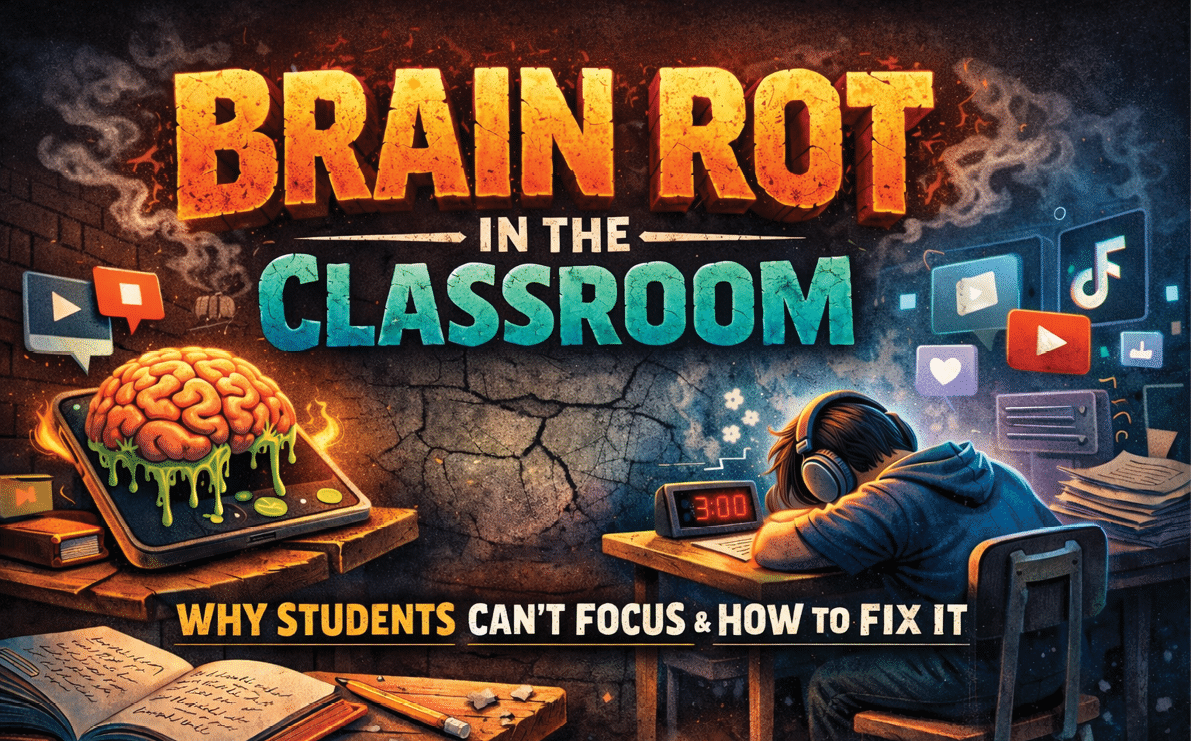
Brain Rot
in the classroom Is not laziness. It Is an Environment Problem.
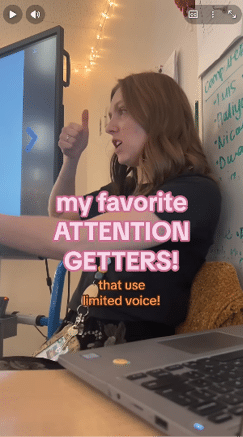
The goal is not content. The goal is switching the brain into learning mode.
B) Use “think first, tool second”
If AI is allowed, make it a second step.
Rule: Students must produce a first draft, plan, or outline before any tool use.
Then you assess the process, not just the final text.
C) Replace passive consumption with active production
If students scroll all day, do not compete with scrolling.
Compete with creation:
• 6 sentence micro argument
• 90 second speaking sprint
• peer feedback with one specific lens
• rewrite one paragraph with one specific target
• Short, measurable, repeatable.
D) Make progress visible
Brain rot thrives when nothing feels earned.
Use:
• tiny checklists
• score bands with one focus only
• before and after examples
• personal best tracking
• Students start chasing progress again.
E) Control the phone without turning into a villain
You do not need war. You need design.
• phone parking zone
• clear start and end moments
• specific windows where devices are used for learning, not boredom
• fast consequences that are boring, not dramatic
• UNESCO’s framing is useful here: smartphones in school only when they clearly support learning.
F) Teach “attention literacy” explicitly
Say it out loud:
• infinite scroll trains switching, not staying
• notifications train interruption
• short form trains constant novelty
• sleep loss destroys self control
• When students understand the mechanism, shame drops and agency rises.
6) A final truth we need to stop avoiding
Brain rot is not just a student problem.
It is a curriculum design problem. An assessment design problem. A classroom culture problem. A parent communication problem. A policy sequencing problem.
If we want students to think deeply, we have to build environments where deep thinking can survive.
And yes, this is exactly why so many schools are rethinking devices, AI, homework, and assessment at the same time. (OECD)
References
American Psychological Association. (2023). Health advisory on social media use in adolescence. https://www.apa.org/topics/social-media-internet/health-advisory-adolescent-social-media-use
European Commission. (2024). Digital services and platform design risks for minors. https://digital-strategy.ec.europa.eu
MIT Teaching Systems Lab. (2023). A guide to AI in schools: Perspectives for the perplexed. https://tsl.mit.edu/ai-guidebook/
OECD. (2024). Students, digital devices and success: Digital distraction, performance and well-being. OECD Publishing. https://www.oecd.org/education/students-digital-devices-and-success/
Oxford University Press. (2024). “Brain rot” named Oxford Word of the Year 2024. https://corp.oup.com/news/brain-rot-named-oxford-word-of-the-year-2024/
UNESCO. (2023). Smartphones in school: Only when they clearly support learning. https://www.unesco.org/en/articles/smartphones-school-only-when-they-clearly-support-learning
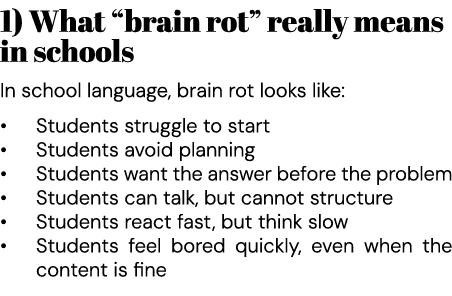
1) What “brain rot” really means in schools
In school language, brain rot looks like:
• Students struggle to start
• Students avoid planning
• Students want the answer before the problem
• Students can talk, but cannot structure
• Students react fast, but think slow
• Students feel bored quickly, even when the content is fine
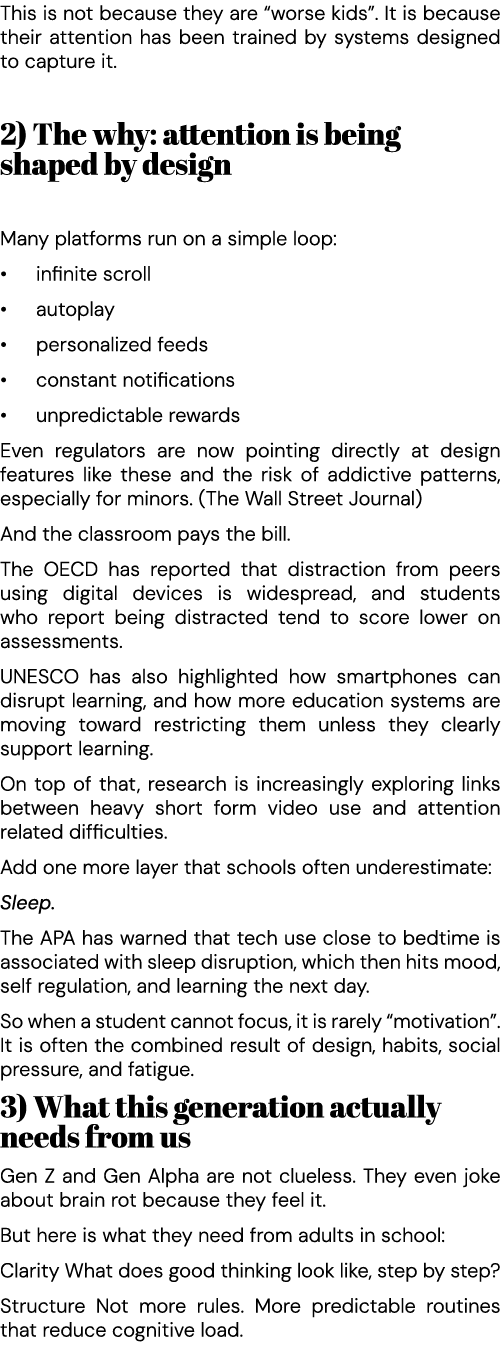
This is not because they are “worse kids”. It is because their attention has been trained by systems designed to capture it.
2) The why: attention is being shaped by design
Many platforms run on a simple loop:
• infinite scroll
• autoplay
• personalized feeds
• constant notifications
• unpredictable rewards
Even regulators are now pointing directly at design features like these and the risk of addictive patterns, especially for minors. (The Wall Street Journal)
And the classroom pays the bill.
The OECD has reported that distraction from peers using digital devices is widespread, and students who report being distracted tend to score lower on assessments.
UNESCO has also highlighted how smartphones can disrupt learning, and how more education systems are moving toward restricting them unless they clearly support learning.
On top of that, research is increasingly exploring links between heavy short form video use and attention related difficulties.
Add one more layer that schools often underestimate:
Sleep.
The APA has warned that tech use close to bedtime is associated with sleep disruption, which then hits mood, self regulation, and learning the next day.
So when a student cannot focus, it is rarely “motivation”. It is often the combined result of design, habits, social pressure, and fatigue.
3) What this generation actually needs from us
Gen Z and Gen Alpha are not clueless. They even joke about brain rot because they feel it.
But here is what they need from adults in school:
Clarity What does good thinking look like, step by step?
Structure Not more rules. More predictable routines that reduce cognitive load.
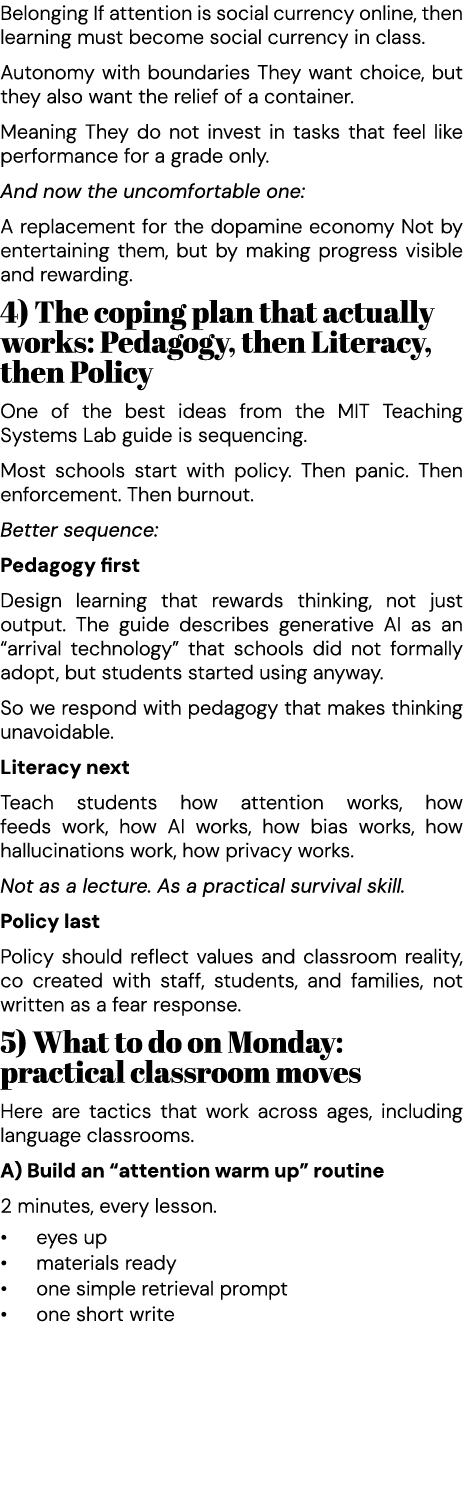
Belonging If attention is social currency online, then learning must become social currency in class.
Autonomy with boundaries They want choice, but they also want the relief of a container.
Meaning They do not invest in tasks that feel like performance for a grade only.
And now the uncomfortable one:
A replacement for the dopamine economy Not by entertaining them, but by making progress visible and rewarding.
4) The coping plan that actually works: Pedagogy, then Literacy, then Policy
One of the best ideas from the MIT Teaching Systems Lab guide is sequencing.
Most schools start with policy. Then panic. Then enforcement. Then burnout.
Better sequence:
Pedagogy first
Design learning that rewards thinking, not just output. The guide describes generative AI as an “arrival technology” that schools did not formally adopt, but students started using anyway.
So we respond with pedagogy that makes thinking unavoidable.
Literacy next
Teach students how attention works, how feeds work, how AI works, how bias works, how hallucinations work, how privacy works.
Not as a lecture. As a practical survival skill.
Policy last
Policy should reflect values and classroom reality, co created with staff, students, and families, not written as a fear response.
5) What to do on Monday: practical classroom moves
Here are tactics that work across ages, including language classrooms.
A) Build an “attention warm up” routine
2 minutes, every lesson.
• eyes up
• materials ready
• one simple retrieval prompt
• one short write




![[ ISSUE 1 | February 2026 ]](assets/images/item_279981.png)



































![[ editorial ]](assets/images/item_296335.png)



![[ edunews ]](assets/images/item_297817.png)






























![[ AI in Education ]](assets/images/item_290603.png)










![[ AI in Education ]](assets/images/item_294563.png)





















![[ AI in Education ]](assets/images/item_294625.png)





![[ global voices ]](assets/images/item_290705.png)



















![[ global voices ]](assets/images/item_290731.png)






![[ global voices ]](assets/images/item_299868.png)





![[ global voices ]](assets/images/item_290755.png)









![[ teaching shorts ]](assets/images/item_298956.png)











![[ global voices ]](assets/images/item_290779.png)



![[ global voices ]](assets/images/item_294733.png)





















![[ analysis ]](assets/images/item_299936.png)






![[ analysis ]](assets/images/item_292019.png)