

![[ ISSUE 3 | APRIL 2026 ]](assets/images/item_279981.png)



















![[ editorial ]](assets/images/item_296335.png)





![[ edunews ]](assets/images/item_297817.png)




![[ edunews ]](assets/images/item_301382.png)












![[ Global Voices ]](assets/images/item_290603.png)

![[ Global Voices ]](assets/images/item_302008.png)







![[ Global Voices Unmasking the classroom ]](assets/images/item_302034.png)


![[ Global Voices Unmasking the classroom ]](assets/images/item_306214.png)




![[ Global Voices ]](assets/images/item_302285.png)


![[ Global Voices Stepping Back or Standing Smarter? ]](assets/images/item_302332.png)

![[ Global Voices Stepping Back or Standing Smarter? ]](assets/images/item_306343.png)










![[ Global Voices ]](assets/images/item_302988.png)





![[ Global Voices The Paradox of Connection ]](assets/images/item_303154.png)








![[ Practical Teaching ]](assets/images/item_303548.png)




![[ Classroom Reality]](assets/images/item_304207.png)

















Everyone Is Moving towards AI, Few Know Why!
BY DIMITRIS SPYROPOULOS
I am not a teacher, nor do I claim to be one. What follows is written from observing the ELT landscape in Greece, through conferences, conversations, and the patterns that repeat across institutions more often than they should.
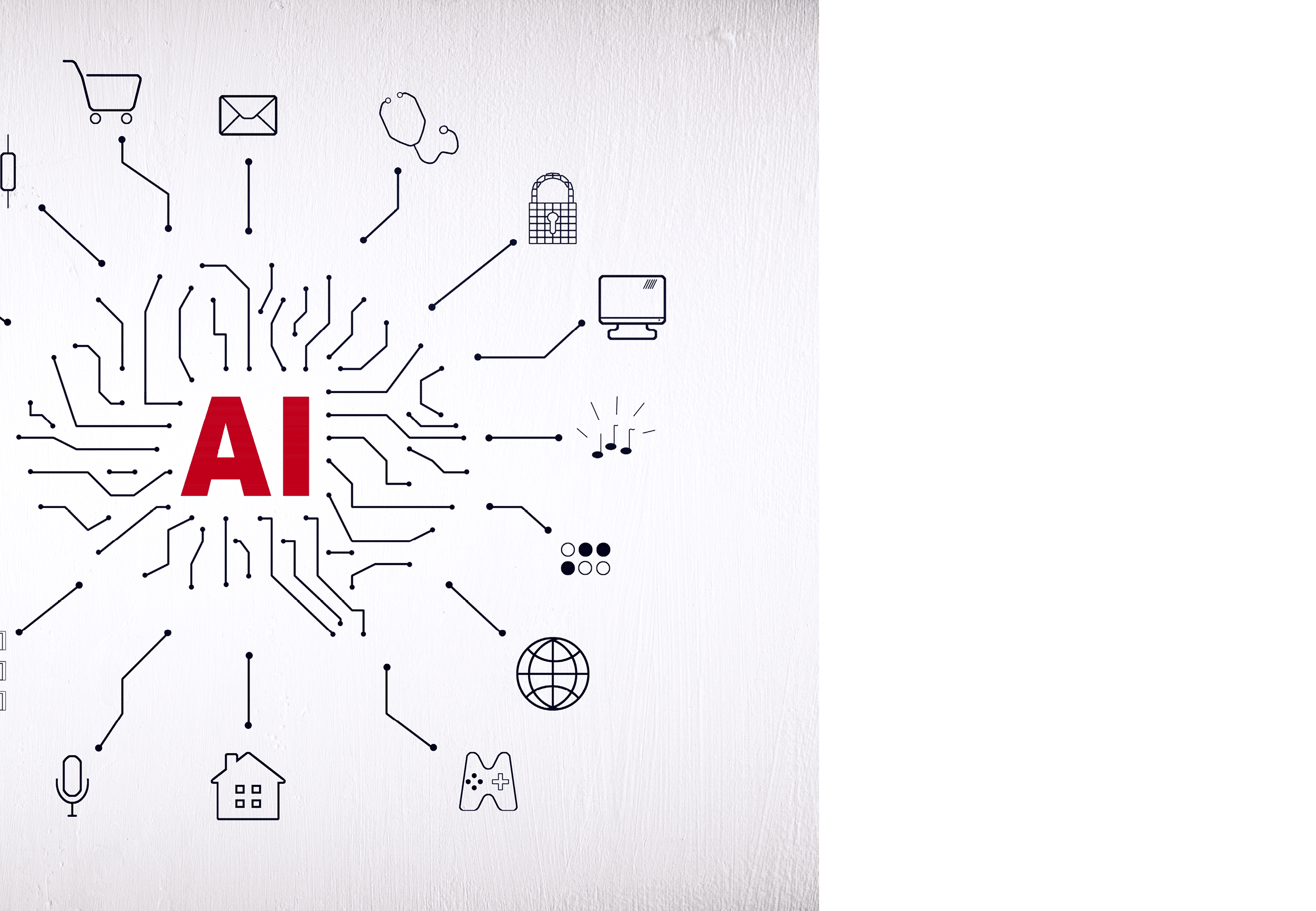
AI has taken education by storm and a sense of urgency that is disproportionate to what we actually understand about it. The urgency is not driven by results, but the kind that builds through repetition. It appears in webinars, conference talks and even in staff meetings. Use it. Integrate it. Move fast. The fear of missing out is consistent. The reasoning behind it is not. If you stop and ask why this is happening, the answers rarely justify the rush. There is no shared direction, only a shared pressure to act.
Tools pop up by the dozen every week, content generators, image generators, video generators. Do not use ChatGPT! Claude is better. “social media ads about learning all the tools to become a master of AI in 40 days”.
One assumption sits quietly underneath all of this. Get it out there and teachers will figure it out. Exposure will lead to competence. Try the tools, experiment, see what works. It sounds reasonable, but it overlooks something fundamental. Using AI well is not a technical skill. It is a professional one. It requires judgement, restraint, and an understanding of how learning actually works. Knowing how to use it is one thing but knowing why and when to use it is a whole different story. That kind of decision-making does not come from occasional use or surface-level training.
What we see instead is familiarity without depth. Short webinars, tool demonstrations, isolated examples. Enough to get started but not enough to build a coherent approach. The result? Scattered use. A worksheet generated here, a set of ideas there, feedback produced quickly when time is limited. Useful in the moment, but disconnected. We focus on the tree but we miss the forest. There is no clear reasoning linking these choices together and no sense of progression. It fills gaps, but it does not shape practice.
At the same time, everyone is still learning. There are no established experts, at least not in the way the term is often used. Those who are positioned as specialists are usually people who have spent more time with the tools. They move faster, they recognise patterns earlier, but they are still operating within the same uncertainty as everyone else. In a space where clarity is limited, even a small advantage can look like authority. Which makes the central question harder to avoid. Why are we adopting AI in the first place?
Some reasons are straightforward. As time is limited, teachers are under pressure, and anything that reduces workload has immediate value. Faster feedback, quicker preparation, less administrative friction. These are not minor improvements. They change the daily reality of teaching.
But the logic shifts when the goal moves from support to simplification. There is a growing idea that AI can make teaching easier in a more fundamental way. That it can smooth out complexity, reduce effort, streamline the process itself. However, that is where problems appear. Learning is not efficient. It involves hesitation, failure, repetition, and time. Remove too much of that, and the process may become cleaner, but also thinner. There is also the pressure of adoption. Schools respond to that pressure. Individuals do as well. The decision is not always about learning. Sometimes it is about staying aligned with what others are doing.
The absence of structure makes this visible very quickly. AI appears everywhere in the teaching process, in planning, in practice, in assessment, in feedback, but without a defined role in any of them. It is present, but not positioned. Teachers experiment. Students adapt. But there is no shared understanding of what effective use looks like over time, or how it connects to learning outcomes.
Ethical questions surface almost immediately. Not theoretical concerns, but practical ones that teachers face daily. Who is responsible for feedback generated by a system? What counts as student work when AI is involved? Where does support end and substitution begin? These are not peripheral issues. They sit at the centre of classroom practice, yet answers vary from one setting to another.
Policy does little to stabilise this. In many cases, it follows the tools rather than guiding their use. Teachers are left to define boundaries on their own. One allows AI freely, another restricts it, another avoids it entirely. Students move between these positions without a consistent framework. Expectations shift depending on the classroom. Underneath all of this sits a more structural problem. The connection between AI and pedagogy is still unclear. There is no widely accepted model that explains how these tools support learning over time, how they fit into curriculum design, or how they influence assessment. Without that link, AI does not transform education but it accelerates what is already there.
There is also a contradiction that is difficult to ignore. For years, teachers criticised publishers for producing repetitive content. Predictable tasks, familiar formats, limited variation. The criticism was justified. Now, many are turning to systems trained on that same body of work.
As Dimitris Primalis has pointed out, AI relies on human-created material. It does not generate knowledge independently. If the input is repetitive, the output will follow. The phrasing may change, but the structure often remains. The effects of that repetition are already visible. Lesson plans begin to resemble each other. Writing tasks feel interchangeable. Articles appear different on the surface, but follow similar patterns underneath. Even social media posts looks smilar. At first, this my be easy to miss. Variation in wording creates the impression of originality. Over time, the repetition becomes more noticeable.
What complicates this further is the feedback loop. AI generates content based on existing material. That content then becomes part of the data shaping future systems. The range narrows gradually through accumulation.
Nothing dramatic happens at once. Classrooms begin to look more alike. Teachers rely more on generated material and less on their own design. Students spend more time refining output than producing ideas from the beginning.
Something less visible begins to fade. The individual voice of the teacher. The small adjustments, the explanations shaped by experience, the way one teacher connects with a group differently from another. These elements do not scale easily and they are not captured in generated content. Yet they are central to learning.
Personally I think that AI is not the problem. The conditions around its use are. Right now, adoption is moving faster than understanding. Training remains limited. Ethical boundaries are still forming. The connection to pedagogy is not yet stable. In that environment, convenience becomes the default.
And convenience has a direction. It leads toward sameness. More content, built on the same patterns, expressed in slightly different ways. That is where the risk sits.
![[ analysis ]](assets/images/item_304965.png)




![[ analysis ]](assets/images/item_305081.png)

![[ analysis ]](assets/images/item_306619.png)