Once, somewhere in the far east, lived a father with his three sons. His wife had died, and time had passed and the father, an old man nowknew that he was dying. So, he called in his sons and said:
“My sons, I have lived a good life, but I think my life is coming to an end very soon. Before I go, I want to leave you with what I have. This house belongs to you all. But my 17 camels will be shared among you in a certain way. You have all worked with the 17 camels. But when I am gone, I want, you Johan to have half of them. So, Johan you will get 1/2 of the camels”. The oldest son felt pleased, and his mind recorded that he would get ½ of the camels.
“As for you Abraham, my second one, you’re going to get one third, I repeat 1/3of the 17 camels”. The second son did not say anything, but his expression showed that he was clearly not happy. He was given fewer camels than his elder brother.
“As for you Liam, my youngest son, remember I love you dearly, but you will end up with 1/9th, I repeat, one ninth of the camels I own”. The youngest son was frustrated. He was too puzzled to work out how much one ninth of the camels meant. Out of respect for his father and the elder brothers, he kept quiet. He just gave a puzzled look when his father explained that this was the custom and this is how things were done according to their tradition.
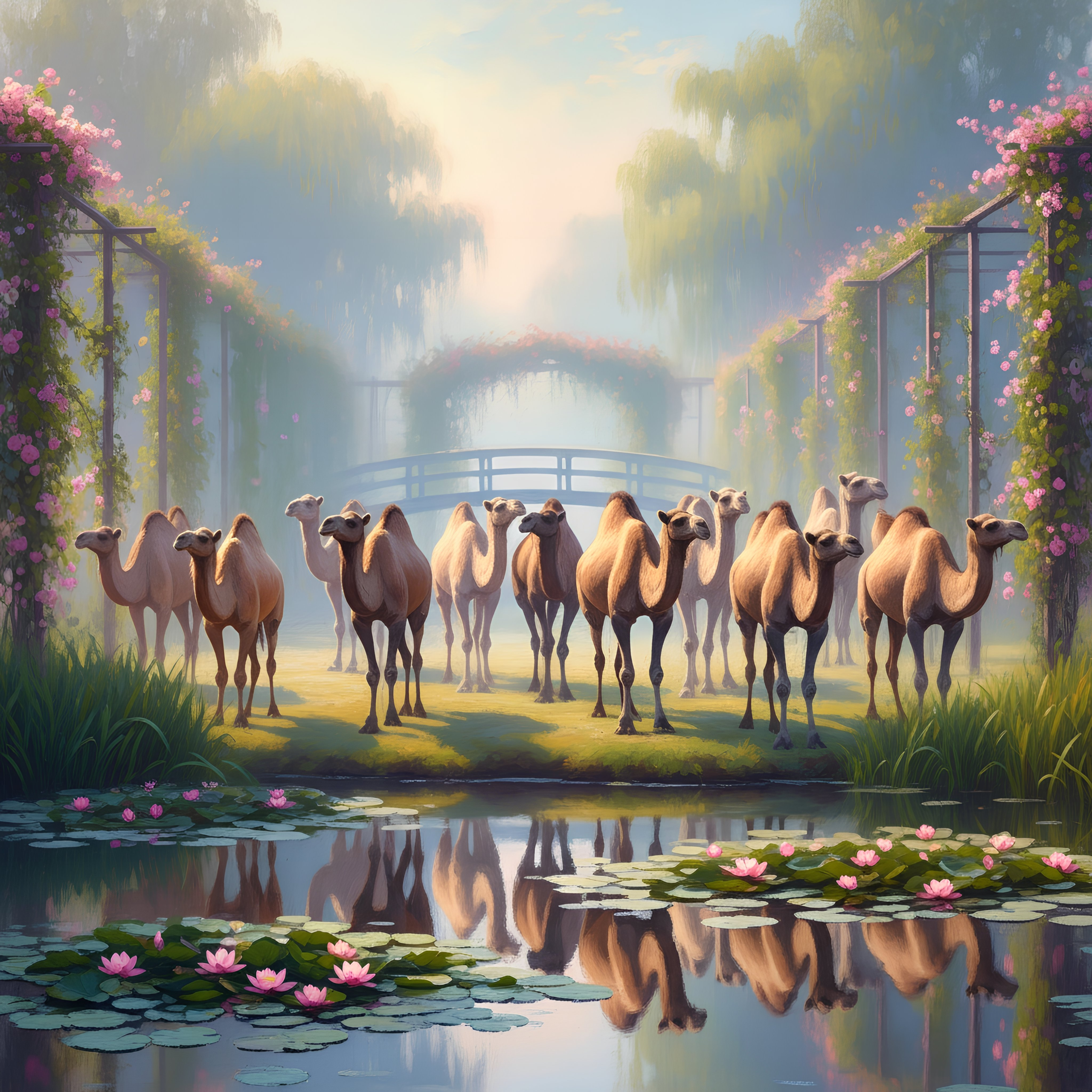
The father died peacefully leaving behind what belonged to him. What was of real value was clearly the 17 camels. The day after the ceremonial burial of their father, the brothers got together to split among themselves the 17 camels. The three brothers tried to agree on how to split their inheritance but immediately ran into problems.
Abraham, the eldest of the brothers announced: “Well I get half of the camels. If we divide 17 by half, we get eight and a half. So, that means that I will get eight and a half camels. I can’t say that this works out very well. I will have to cut a camel in two”.
“This cannot be so” yelled the second son. “Let me work out what I get. I get one third of of 17. If I divide 17 by 3, I get 5 camels and 2/3ds of a camel. How do I walk out with two thirds of a camel? That is insane”.
“Neither the first, nor the second share makes any sense. This cannot be so” protested the third son and tried to figure out how many camels he would get. He calculated that one ninth of 17 was not even one camel. If we divide 17 by 9, we get something like 2 thirds of a camel. It was all crazy. None of the sons knew any maths.
The three brothers could not work out their inheritance and after some arguing the oldest one announced. “Brothers I did not make the rules. We cannot get father to explain. So, I will go ahead and get eight whole camels and one half. I guess I’ll cut one in half.”
Then the second son yelled that it was crazy to even think of doing anything of the kind. What use would the half camel be to him? He insisted that the whole matter of sharing was insane because he would have to get 5 camels and two thirds of a camel and this simply was impossible.
The youngest brother kept crying “No, no brothers. No, no brothers. There must be a way to solve this mess. And all this is so unfair because I am getting almost nothing”. The brothers spent the morning arguing. The neighbours heard of the problem and suggested that they take the matter to the wise woman of the village.
So, the sons agreed to ask the wise woman to come over and advise them. A neighbour offered to contact the old wise woman who at some point and after some hours appeared to the three brothers’ house walking next to her camel. The brothers offered her tea and explained the situation. The oldest son said that he had to get 8 and a half camels. The middle one said he needed to get 5 and two thirds of the 17 camels and youngest one said that he was left with one ninth of the seventeen camels, and this meant he could not even have one whole camel.
The woman thought for a moment and said that she would help them. They were relieved to hear this. She asked them to go outside the house. They walked where she had left her camel. She pointed to her camel and spoke. “This camel will help. You can keep it for now”
The brothers wondered. “But that is your camel. Is it not?” The old woman replied that it was her camel but for the time she would use it to solve the puzzle. She then went on to say that one and seventeen camels made 18 camels. The brothers agreed. That was easy maths. She then turned to the eldest son and spoke. “You were given half of the camels, so this means 9 camels out of the 18 camels that are here now. You, middle son were given one third of the camels. 18 divided by 3 gives us six camels. This means that you get 6 camels. As for you, the youngest brother, you were given one ninth of the camels. If the total is 18, one ninth is 2 camels. So, two camels go to you”.
She then repeated what each one of them should get. The oldest son should get 9 camels; the middle son 6 and the youngest one should get 2 camels.
The brothers did the addition and 9+6+2 made 17. The total was truly 17 camels. The old woman got back her camel and lots of thanking from the brothers and left. The sons walked back home. In the house they tried to figure out how the riddle had worked. They started wondering how the maths behind that story worked and where their father had gone wrong with the instructions he had given them
INTERGRATING STORYTELLING INTO STEM CONCEPTS.
This classic math tale can involve students in a conversation on how this riddle story works. The discussion goes around how the maths workedin the old man’s head. He had calculated the proper fractions ½, plus 1/3, plus 1/9 but did not account for the whole which should be 18 not 17. He had not accounted for the whole. These proper fractions are part of the whole which is 18 and not 17. The wise old woman understood the maths embedded in the riddle. She was able to recognise that adding a camel gave her the whole and that is what did the trick.
THEORETICAL UNDERPINNING.
Stories and STEM problems may seem different, but they are two sides of a coin. They share several important similarities in how they are structured and understood.
Both are about a problem and a solution. Stories usually center on a conflict that needs to be resolved, and STEM problems present a question or challenge that requires a solution.
Both require logical thinking. In stories, events follow cause-and-effect relationships. In STEM problems, steps and calculations must follow logical rules.
Both rely on understanding context. Stories are about the setting, characters, or situations. Those solving STEM problems must understand the information, variables, and conditions given.
Both STEM and Storytelling deal with sets of elements or characters that are often unique and interact with each other.
Both use symbols. In stories we use language, metaphors, and descriptions to convey meaning. In STEM problems we use numbers, formulas, diagrams, graphs, or symbols.
Both require interpretation. When we read stories, we have to interpret themes, motives, and messages. When we solve STEM challenges we have to interpret data, equations, and results.
STEM and Storytelling both involve sequencing, patterns, cause and effect.
Stem and Storytelling both involve problem-solving often with multiple pathways and approaches. We can interpret a story in different ways and we can solve a STEM problem using different strategies.
Both aim to communicate meaning. Stories communicate ideas, emotions, or lessons. STEM problems communicate knowledge, patterns, or principles about the real world.
THE TAKEAWAY
When we involve storytelling in a stem situation, we enhance the absorption and comprehension of the STEM content because we activate imagination, characterisation and emotional connections. When we have a stem content for our younger students, we could try to give it a character and some emotions which will draw the students in and make them care for it. If we dofigure out a story that aligns with the stem content, the target audience, and the time at our disposal, we add a narrative framework to maths, science and physics and out STEM content is better understood.