“A word after a word after a word is power.” — Margaret Atwood
When learners master new words, something magical happens. They don’t just gain vocabulary — they gain confidence, voice, and access to worlds of meaning. Vocabulary is the invisible architecture of fluency. Without it, communication falters; with it, language comes alive.
Yet, for all its importance, vocabulary building is often treated like a supporting act rather than the main show in language classrooms. Too often, lists are memorized, quizzes are taken, and words are forgotten the following week. But what if we could change that? What if vocabulary learning could feel less like rote work and more like discovery — a process of owning language rather than borrowing it.
The Power of Words
Research has consistently shown that vocabulary size predicts language proficiency more reliably than grammar knowledge. It determines reading comprehension, listening fluency, and even speaking confidence. In short, vocabulary is the fuel of communication.
But vocabulary growth isn’t linear. Learners experience bursts — moments when connections suddenly form and new words “stick.” These breakthroughs often occur when language is learned in context, not in isolation. As Paul Nation reminds us, “A word is not just form and meaning — it’s a network of associations.” To truly know run, for instance, learners must recognize how it behaves — run out of time, run a business, run late — and in what emotional or cultural settings it appears. That’s where the art of vocabulary building begins: in the interplay between memory, emotion, and experience.
Context Is the Glue
The brain is a master of patterns. When we encounter a word repeatedly, in meaningful contexts, neural pathways strengthen and recall becomes automatic. That’s why vocabulary lists, though useful, are only the starting point. The real magic happens when learners meet the same word across different “story worlds” — in a movie line, a classroom discussion, a personal diary, or even a meme.
Contextual learning transforms vocabulary from abstraction into experience. When a learner writes, “I was bewildered when my cat learned to open the fridge,” they will remember bewildered far longer than if it appeared on a flashcard alone. Presenting a word across multiple genres — a news headline, a lyric, a dialogue, a joke — helps learners see how meaning subtly shifts. Words acquire life when learners feel them, not just memorize them. That’s why emotional anchoring — connecting a word to a feeling, color, or image — is such a powerful retention technique. Words that trigger emotion are words that stay.
The Science of Retention
Learning a word is one thing; keeping it is another. Forgetting, ironically, is part of learning — but it can be managed. Cognitive research suggests that retrieval practice — forcing the brain to recall information after intervals — dramatically improves long-term retention. Instead of re-reading or highlighting, learners should test themselves in small, spaced bursts.
Spaced Repetition Systems (SRS), such as Anki or Quizlet, use this principle algorithmically, predicting when a learner is about to forget a word and reintroduce it just in time. But SRS doesn’t have to be digital. Teachers can recreate it in class through quick-fire review games or “memory boxes,” where words are recycled after one day, one week, and one month. The motto is simple: don’t cram — space it out. Don’t reread — recall.
Digital Tools with Purpose
Today’s learners live in an ocean of digital possibility. The challenge isn’t access — it’s engagement. Technology can make vocabulary learning dynamic and personal when used with purpose. Quizlet and Wordwall are ideal for collaborative play, allowing learners to race against the clock as they connect synonyms and definitions. Memrise and FluentU bring vocabulary to life with authentic video content, letting learners see words in cultural motion — spoken, sung, and joked about.
Some teachers encourage learners to keep digital “lexical journals” in Notion or Google Docs, curating their own living dictionaries. Each entry can include an image, collocation, idiom, and even a meme. The act of curating words turns learning into a creative process rather than a mechanical task. And now that AI chatbots can simulate natural conversation, learners can even set vocabulary missions — “Use all the words from Unit 5 in a dialogue about a job interview.” When technology enhances interaction rather than replaces it, vocabulary becomes a living, breathing part of communication.
The Joy of Play
Play is learning in disguise. When learners play, they drop their guard — and that’s when real language emerges. Vocabulary games transform repetition into joy. Imagine a Vocabulary Auction, where students bid virtual money on words they believe they can explain or use best. The catch? They must later define or use each “purchased” word to keep their winnings. Or the Collocation Challenge, where pairs compete to generate as many natural pairings as possible with a given verb — take a break, take a risk, take charge.
Another classroom favorite is Word Detectives. Learners become linguistic sleuths, hunting for target words in shows, podcasts, or social media feeds. Each sighting becomes a “clue” in their vocabulary journal. These activities tap into the brain’s love of pattern, competition, and playfulness. Gamification doesn’t just make learning fun — it makes it unforgettable.
From Recognition to Production
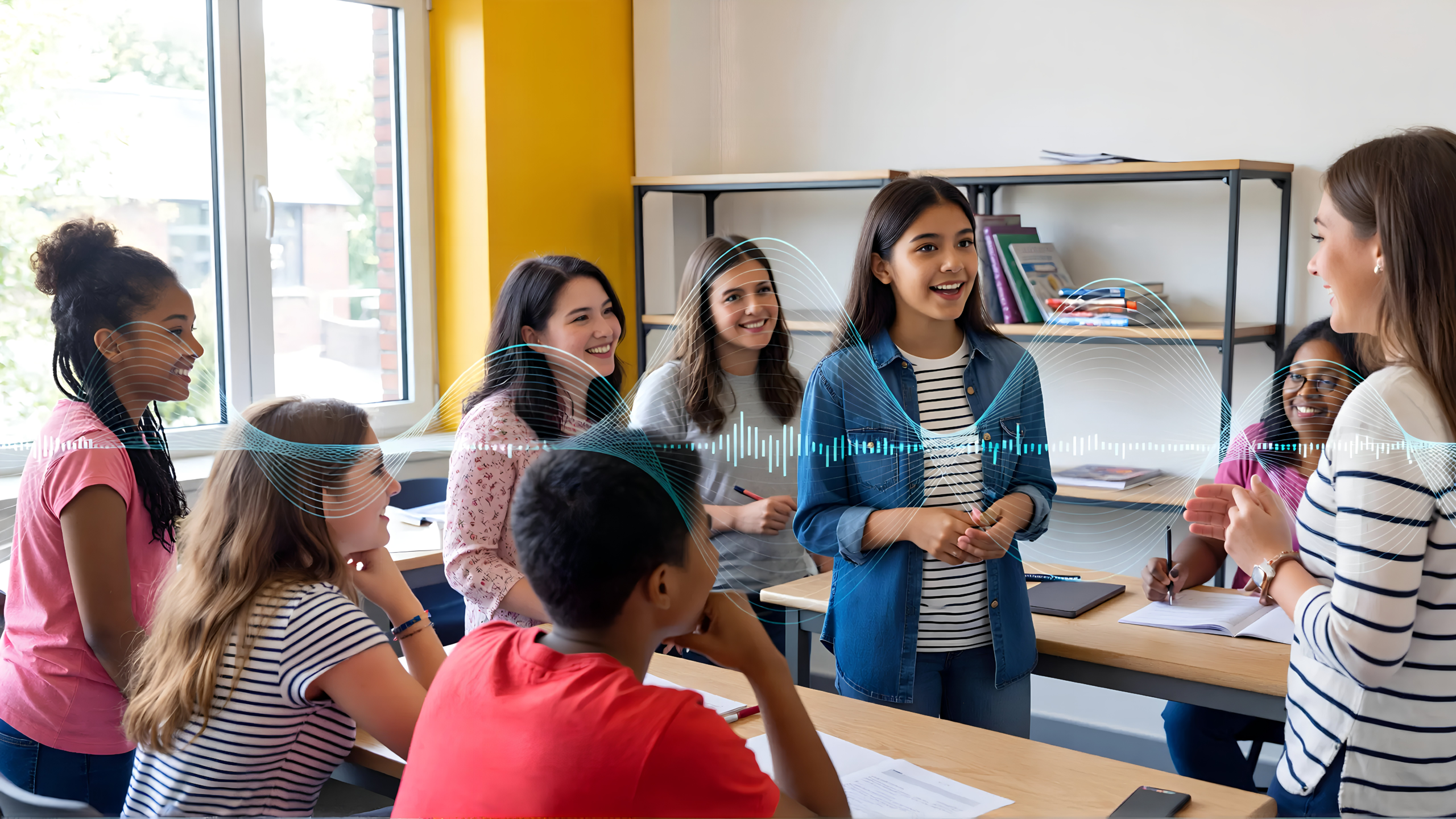
Most learners understand far more words than they can actively use. Bridging that gap between recognition and production is essential. The goal is to activate vocabulary — to move it from passive knowledge to living expression. One simple way is to issue weekly challenges: “Use at least five new words in a voice message to the class group.” Or, have learners explain new words to a partner — no dictionaries allowed. Reflective writing works wonders too: “Describe your week using at least ten adjectives you’ve learned this month.”
When learners use words to express their own meaning, those words stop being foreign. They become part of their identity, their way of thinking and feeling in the new language.
The Human Element
Ultimately, vocabulary isn’t just about words — it’s about people. It’s about curiosity, emotion, and connection. When teachers model their own love of words — sharing etymologies, cultural nuances, or personal “word stories” — they ignite that same spark in their learners. A teacher who says, “My favorite word this week is serendipity — because it reminds me of how I found this class by accident,” doesn’t just teach vocabulary. They teach wonder.
Language thrives where curiosity lives. Perhaps the most effective vocabulary strategy is also the simplest: keep wonder alive. Encourage learners to chase words they fall in love with, to notice language everywhere — in lyrics, films, street signs, and snippets of conversation — and to treat every new word as a doorway, not a duty.
A Living Lexicon
Vocabulary building isn’t about memorizing words; it’s about building worlds. It’s about seeing language not as a static system but as a living organism that grows with us. Whether through storytelling, digital journaling, flashcards, or games, the goal remains the same: to make words meaningful, memorable, and deeply personal.
When learners own their vocabulary, they don’t just learn a language — they learn to think, dream, and belong in it. And that, perhaps, is the most powerful lesson of all.