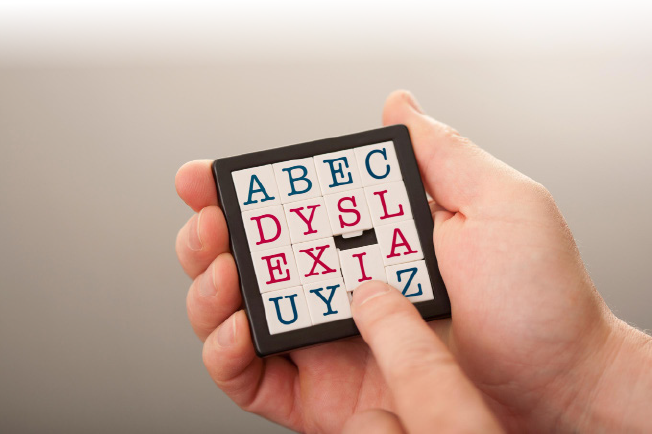

“It doesn’t matter that you’re not reading as fast as the other kids in your class yet, honey; not everybody is made the same. Actually, we all grow at our own pace, as nature intended, and in that sense, we’re all different and unique.” With these words, I was trying to explain to my nine-year-old daughter her different way of learning and perceiving input in my attempt to comfort her frustration about school lessons. We were just discovering her dyslexia issues.
In public primary school she was mocked by her classmates for not reading well; kids can be harsh and cruel at this age—or are they simply reflecting societal stereotypes and home upbringing without filters? Her early-grade teachers were largely unaware of the issue. We were extremely lucky though; her senior grades teacher was a truly extraordinary educator with relevant interests and broad training. She helped both my daughter and me gain our first insight into dyslexia matters.
“I want you to picture reading like a ‘little box’ in your mind, one that has not yet reached its full capacity, while other ‘boxes’ like writing, drawing, solving math problems, running, dancing, crafts-making are above average and growing at a faster pace.” “Now, every kid has them, and like your reading box, not all your classmates maintain the same level of competence in all their boxes.” I didn’t know it then, but my motherly, intuitive, unscientifically stated theory sowed the seeds of a deeper understanding of diversity and differentiation within her. This makeshift, expedient theory gradually moulded a sense of identity inside her. She was growing to be special in her own way.
“There will soon come a day that you will manage to read at a regular speed, and your spelling will significantly improve if you keep trying your best…” And by best it was meant, by exploration of various distinct ways of accommodating different needs. Marking my words, she spent all her junior high school years yearning for acceptance, recognition and accomplishment. She was struggling to ace and maintain top marks – she was even tasked with keeping the attendance register of her class, struggling to prove her worth to a multitude of high school teachers, some of whom were not only uninformed but also unwilling to address educational issues beyond their expertise. Most importantly, she was struggling to form her identity. She couldn’t fit into any peer group as she was neither the typical nerd, nor the popular gossip girl, or any type of rebel; and high school became hellish, as primary school mocking turned into bullying. Accomplishment had come, but at a high cost. On top of that, she was continually exhausting herself through all this struggle.
We received her first official diagnosis at age 14; last grade in junior high school. By then, she had already been established as a high performing student owing to her hard work. An earlier diagnosis from a private centre made us, the divorced parents, feel incredibly proud. It asserted that our daughter was rather exceptional in overcoming her quite severe dyslexia issues; she had discovered her own unique ways to deal with the difficulties she was facing, and had invented techniques and strategies to organise, facilitate, and take control of her own learning process. The pattern she was exhibiting was not the typical practice evident in the average dyslexic teenager sample. Not only that but her fruitful participation in English speaking programmes such as the Erasmus + student exchange programme, and the Model United Nations Conference programme, which required a high level of competence in the English language, along with delegation and presentation skills, proved solid evidence of breaking stereotypes of adversity in second language acquisition for dyslexic children.
The main reason behind getting a rather late for her age and condition diagnosis, apart from the fact that the natural cognitive process on its own takes time to assess and ascertain the actual existence or seriousness of each case of learning difficulty/disability, was the fact that averting the label early on prevented her from internalizing the stereotypes and limitations often associated with it. It meant that the child avoided identification with the limited stereotype of a particularly needy and dependent student profile. Freed from such assumptions, she managed to focus on her differentiated needs and develop a growing sense of autonomy and independence in managing her studying.
Consequently, the findings of her delayed diagnosis were exploited wisely in her favour, allowing her to maintain top performance at school in a less arduous manner, protecting her rights to equal access to excellence in education, by offering her extra support and accommodation regarding the learning process settings. In practice, she was allocated extra reading time during exams, exemption of spelling mistakes and choice over oral and written assessment. However, the real benefit from delaying a diagnosis was that she was spared the additional, socially constructed ‘disablement’ that often results from labelling, and was ‘allowed’ to be governed by the restrictions imposed by her nature only.
Disability has many faces and disability identities are born every day and every minute. They can be permanent, long lasting or temporary. People may share experiences of disability that might feel very consistent over time or may fluctuate over a lifetime. People who would legally, medically, and institutionally qualify as having a disability for the purposes of rights protection and access to support, may not identify with the language of ‘disability’. They might discover that the language of ‘disability’ only applies to them when filling in government forms or applying for accommodations.