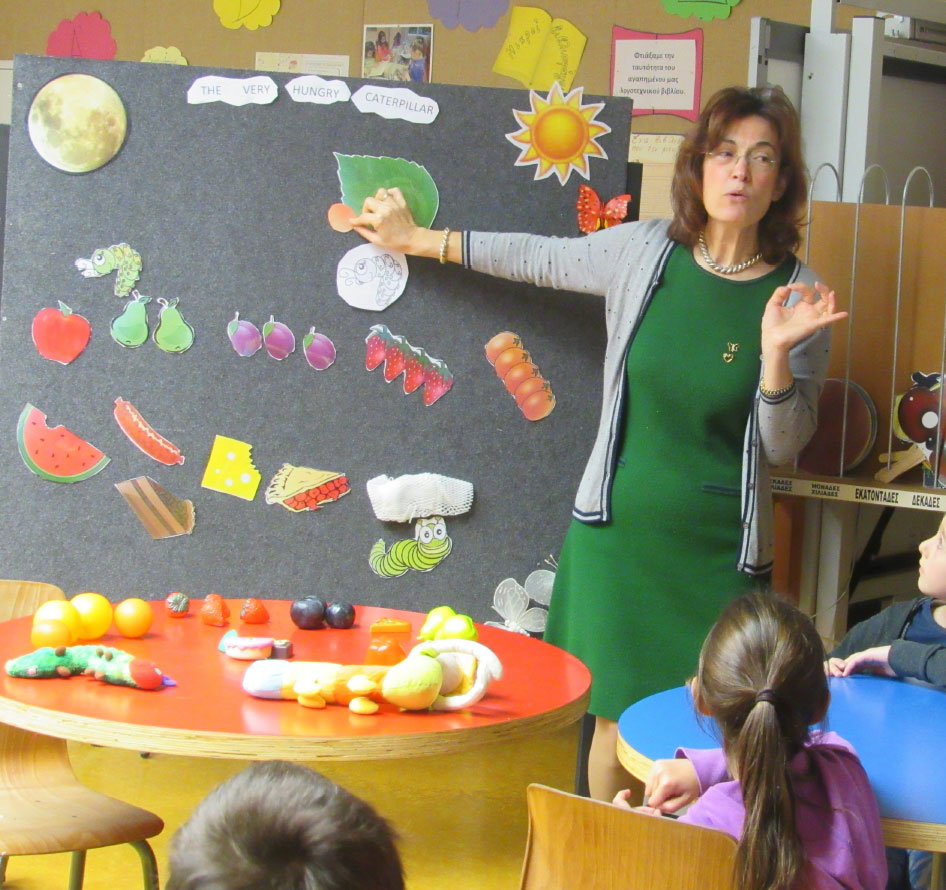
At a time when education is being reimagined beyond textbooks and tests, Chara Kourlessi stands at the forefront of an inspiring pedagogical shift—one where language learning meets cinematic imagination. An award-winning educator and screenwriting instructor, she has pioneered innovative programs that blend English language teaching with visual storytelling, empowering children to become confident creators of meaning, emotion and ideas. Rooted in her belief that “true education blooms when children craft worlds through words,” her work draws from Swedish children’s literature, classic texts and collaborative filmmaking practices to cultivate empathy, critical thinking and global citizenship. In this interview, Chara Kourlessi reflects on the inspirations behind her approach, the challenges and triumphs of bringing screenwriting into public education, and her vision for nurturing the next generation of creative storytellers.
What inspired you to design educational programs that combine English language learning with screenwriting and visual storytelling for children?
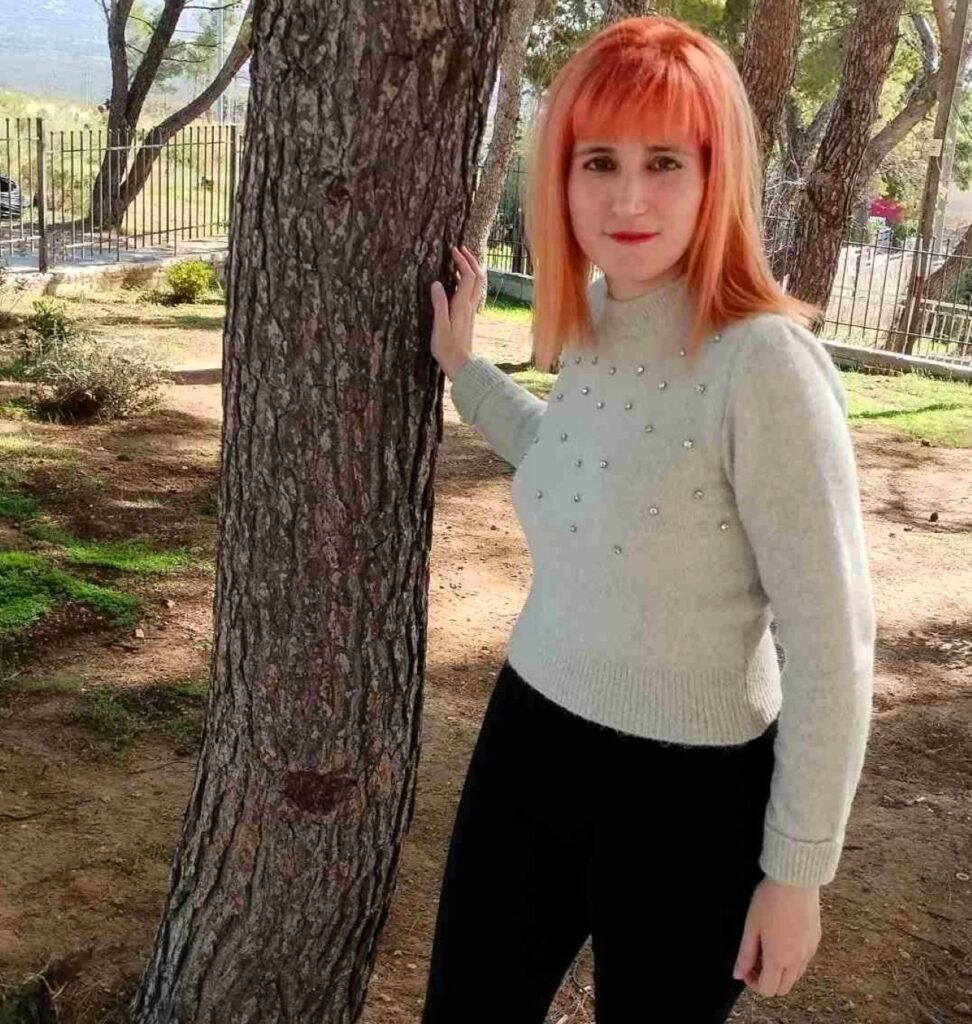
My passion to teach screenwriting stems from my deep desire to ignite young minds by blending language learning with the magic of storytelling. I’ve always believed that true education blooms when children craft worlds through words and my vision is to pass on my cinematic expertise to spark their individual creative journeys. For example, I teach them how to build plots with rising tension and emotional arcs, breathe life into fictional characters with depth and relatability, set scenes that transport audiences and employ visual storytelling techniques to “show” rather than tell, creating natural, heartfelt dialogues that ring true to life. Thanks to ELT EXCELLENCE AWARDS, my screenwriting program for kids has already won two prestigious honours: the gold award for innovation in education and the silver award for excellence in teaching foreign languages indicating that creative approaches to teaching resonate widely and deliver measurable impact.
Your program adapts Swedish children’s literature into English screenplays. What do you believe makes Swedish storytelling particularly suitable for cultivating creativity, empathy and social awareness among young learners?
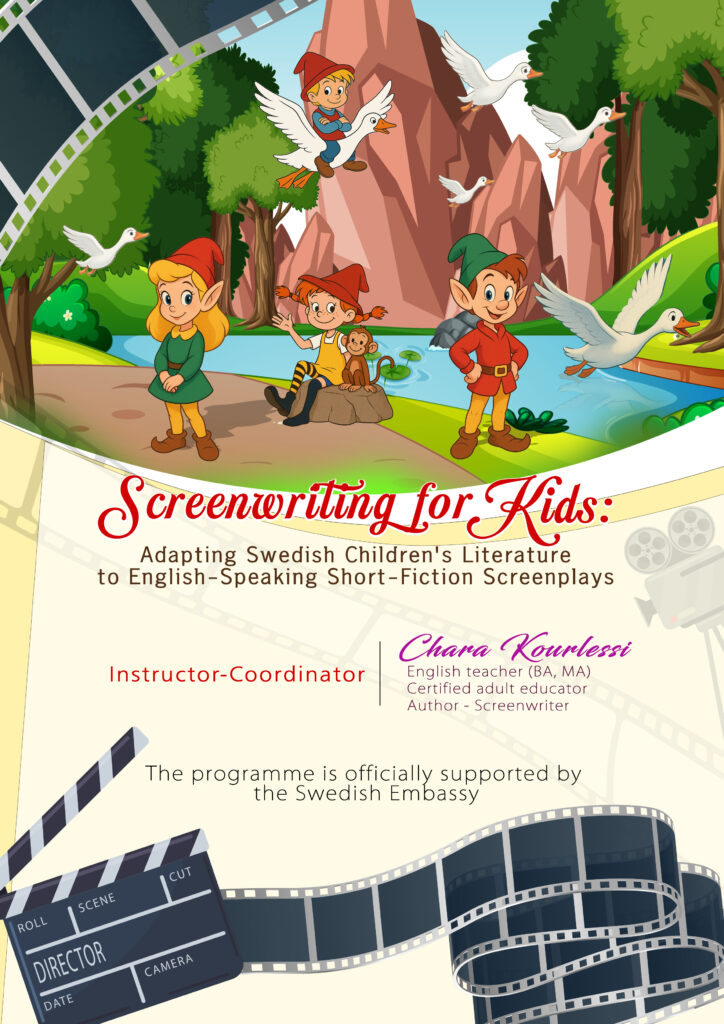
Swedish storytelling fosters empathy and understanding, sparking social awareness about equality, environmental harmony and community solidarity. For example, Astrid Lindgren’s “Pippi Longstocking” stimulates students’ imagination with her fearless individuality, superhuman strength and upside-down logic. Similarly, Selma Lagerlöf’s “Nils Holgersson’s wonderful journey across Sweden” captivates my students’ interest teaching profound values like humility, environmental respect and interconnectedness with nature. To my mind, Swedish children’s literature bridges our ancient Greek ideals of democracy and hospitality with Nordic humanism. This cross-cultural alchemy not only boosts my students’ linguistic confidence, but it also plants the seeds of global citizenship.
How do these screenwriting programs help students develop not only linguistic skills but also emotional intelligence and social responsibility?
Besides the obvious linguistic and communicative benefits, my screenwriting programs cultivate emotional intelligence and social responsibility. By inhabiting characters’ inner worlds, students are forced to explore motivations, conflicts and resolutions, boosting their self-awareness and resilience. For instance, fleshing out the hero’s doubts teaches perspective-taking, mirroring real-life emotional navigation while visualizing societal themes sparks dialogues on inclusivity and justice, transforming kids into compassionate creators ready to shape a better world.
Can you share a particularly memorable moment or student response that confirmed for you the value and impact of this innovative teaching approach?
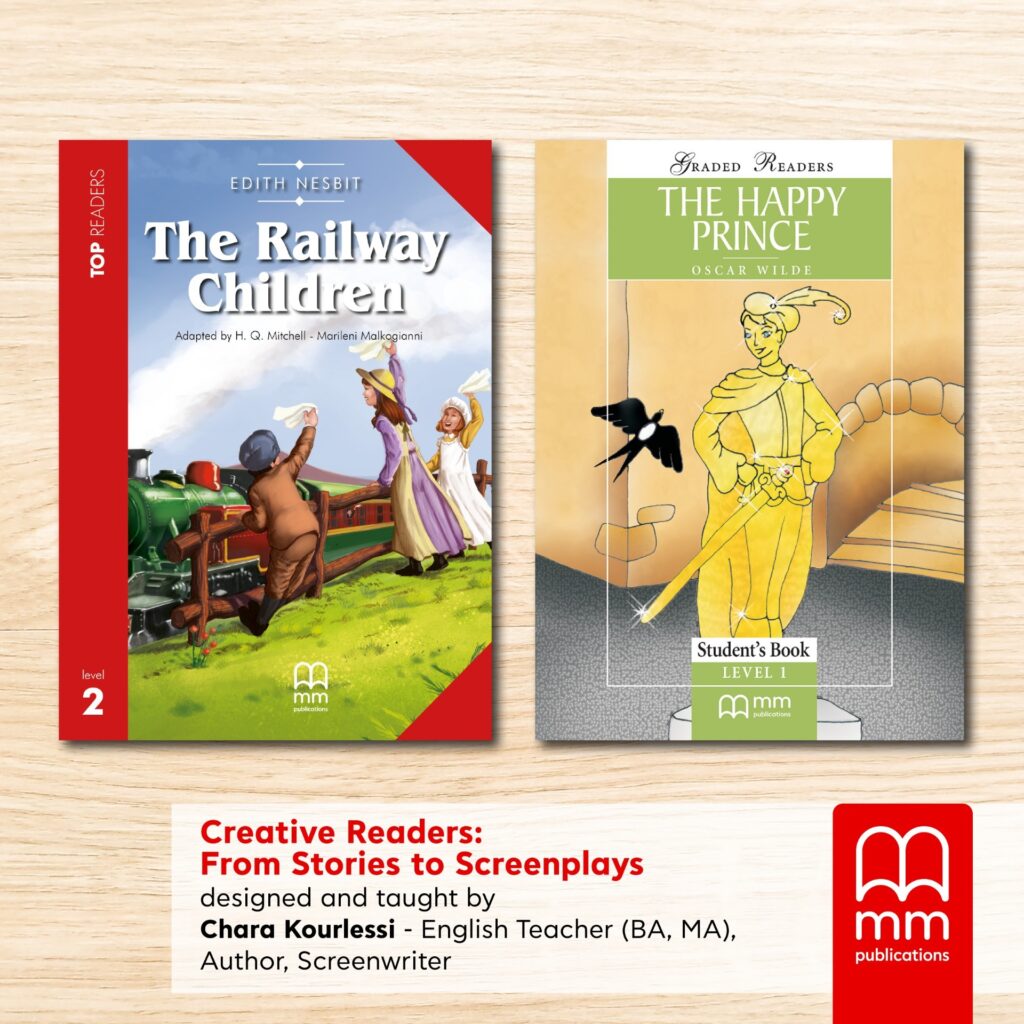
This year I launched a brand-new introductory screenwriting course for fifth-graders, where students learn to visualize ideas and transform literary works into English-language screenplays, exploring innovative creative expression through teamwork. In fact, children engage with classic stories by Oscar Wilde, Charles Dickens and other prominent writers, carefully selected from MM Publications’ rich collection, which kindly supports my teaching endeavor. A truly memorable moment came right after finishing the in-class reading of one of these incredible English stories. A student shared openly that he felt worried it was over and his classmates nodded in agreement, hanging on every word. Actually, this genuine reaction reveals how literature deeply touches children’s hearts, drawing them into emotional worlds they never want to leave. It also confirms that my innovative approach works, transforming mandatory English lessons into magical shared experiences that truly kindle genuine love for storytelling.
In what ways does transforming literature into short film scripts enhance children’s critical thinking, collaboration and imagination compared to traditional teaching methods?
Transforming literature into short film scripts elevates learning beyond traditional methods by harnessing visual storytelling through adaptation where multiple readings of the same text yield fresh interpretations that deepen understanding. In fact, students have to scrutinize narrative layers, choosing what to visualize, condense or reinvent for screen and proving how re-reading inspires true analytical depth. Also, through teamwork my students learn to integrate ideas and negotiate visions by exercising active listening and collective spirit, skills absent in individual assignments.
How does international cultural cooperation, especially your collaboration with the Embassy of Sweden, enrich the educational experience for both students and teachers?
International cultural cooperation transforms my English classrooms into vibrant global hubs, enriching students with creativity, empathy and emotional well-being. By diving into Swedish myths and fairytales, for instance, students boost their emotional resilience and confidence, building their own values compasses through intercultural understanding. Needless to say that under the Embassy of Sweden’s supportive umbrella, I gain motivation as an instructor and course designer to pioneer initiatives, embrace fresh teaching perspectives and sidestep burnout which is a constant risk in our demanding profession. Anchored in public school premises, this partnership proves that innovative teaching truly thrives there, empowering students and educators alike.
What challenges did you face when introducing screenwriting into public primary education and how did you overcome them?
It is worth to be mentioned that I’m deeply grateful to parents whose constant encouragement and support over these years have made this pioneering work possible. Without their trust and respect, these classroom transformations simply wouldn’t have succeeded. When it comes to challenges, some primary school students initially struggled with crafting natural dialogues and applying visual storytelling techniques so as to convert vivid prose into cinematic scenes. However, my carefully crafted materials, featuring theoretical frameworks, practical examples and valuable tips, paved the way, breaking down complex concepts into digestible steps that progressively built student confidence and autonomy.
Looking ahead, what are your future plans for expanding these programs and how do you envision your role in shaping the next generation of creative thinkers and storytellers? Right now, I juggle multiple projects but my core educational duties limit time for broader artistic pursuits, keeping me focused on classroom impact. Through the pioneering screenwriting programs for kids, I aim to equip the next generation with passion, vision and specialized knowledge, transforming young minds into bold, empathetic creators who weave stories that bridge cultures and embrace change. It goes without saying that I’ll keep nurturing their creative writing dreams, guiding them to publish books, launch media careers or simply find joy and satisfaction in storytelling. My own success story would be complete if tomorrow’s artists, novelists, scriptwriters and directors emerged from my public school classrooms. That would prove creativity knows no boundaries, requiring only authentic passion, dedication and a teacher who never stops fueling children