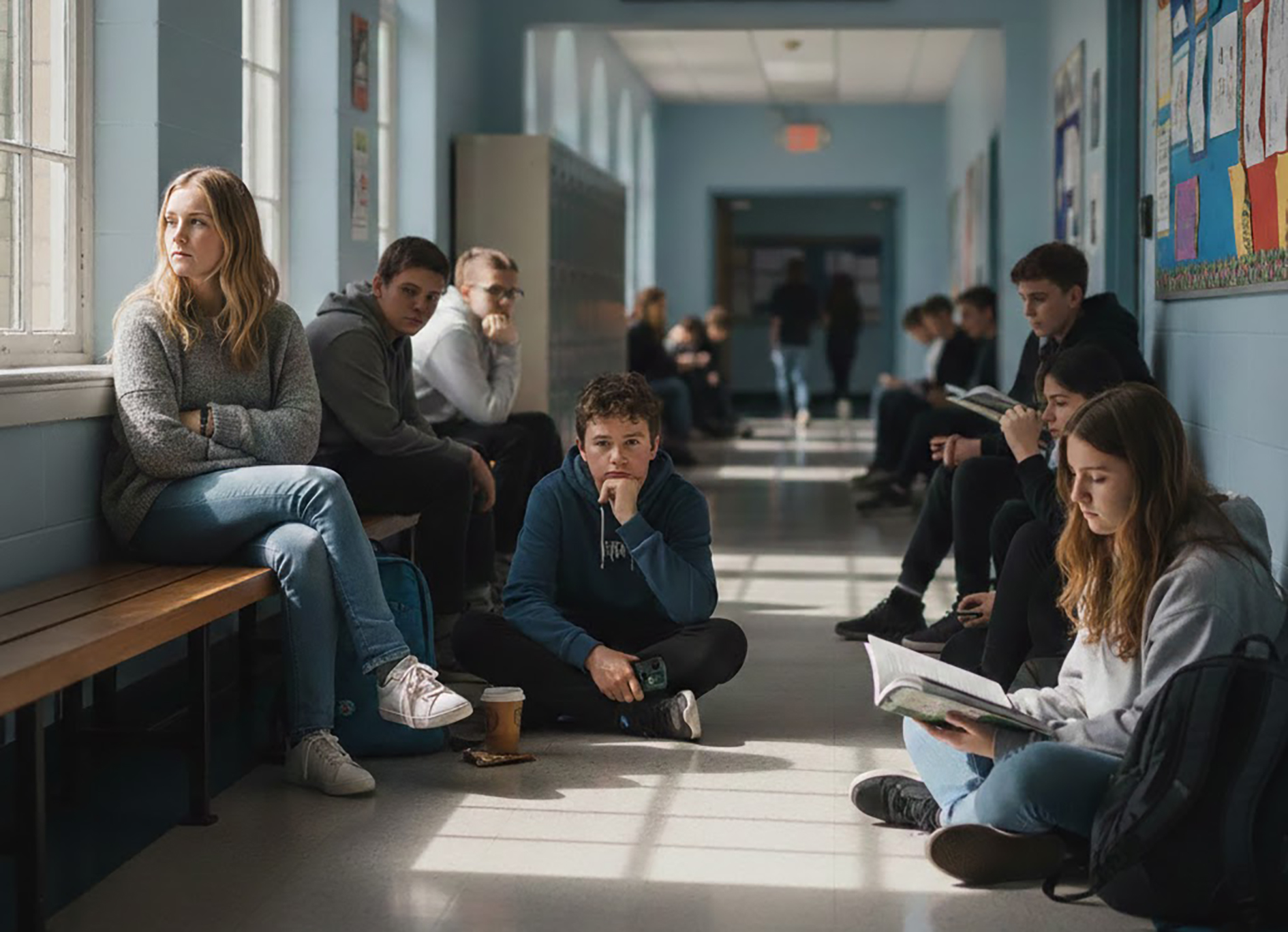
Ask virtually any teacher what’s on their mind most at the moment, and you’ll get the same answer: students who have checked out. They’re physically there but mentally somewhere else scrolling, staring, waiting for the bell. It might seem that the explanation is just laziness or lack of discipline, but there is something far more interesting going on. It’s not that students who are disengaging don’t care. They are tuning out because, in a lot of instances, school doesn’t seem to care about them anymore.
At the heart of disengagement is a question that is seldom spoken but often thought by students: Why does this matter? So much of what takes place in classrooms seems disconnected from real life. Students memorize to-be-forgotten information; complete to-be-repurposed assignments; and prepare for tests shaped for one purpose, after which we engage in learning that is unregulated by school. When there is no purpose to learning, motivation diminishes. Curiosity doesn’t last very long in a world of busy work.
Many students also feel trapped in a system that treats them as identical. Same lessons, same pace, same expectations—regardless of interests, abilities, or learning styles. For students who struggle, this can be deeply discouraging. For students who need more challenges, it can be painfully dull. Over time, repeated frustration sends a quiet but powerful message: This place isn’t for you. Disengagement becomes a coping mechanism, not a character flaw.
Grades and testing add another heavy layer. When success is measured almost entirely by numbers and scores, learning turns into a performance rather than an exploration. Students begin to associate school with pressure, fear of failure, and constant comparison. Those who fall behind often decide it’s safer to stop trying than to keep failing publicly. In that context, disengagement isn’t apathy—it’s self-preservation.
A lack of control over learning also plays a role. Many students feel they have no voice in what or how they learn. Their days are tightly scripted, their choices limited. When school feels like something is done to them instead of with them, motivation disappears. Humans, especially young ones, need autonomy to feel invested. Without it, even capable students shut down.
Then there’s the relational side of disengagement, which is often overlooked. Students are far more likely to engage when they feel seen. A teacher who notices when they’re absent, asks about their interests, or believes in them can make school feel safer and more meaningful. But crowded classrooms, heavy workloads, and time pressures make genuine connection harder than it should be. When students feel invisible, disengagement is almost inevitable.
Outside the classroom, many students are carrying far more than adults realize. Anxiety, depression, family stress, financial insecurity, and the constant noise of social media follow them into school each day. Expecting full focus from students who are exhausted or overwhelmed is unrealistic. When emotional and mental health needs go unmet, learning becomes secondary to survival.
For some students, disengagement is also tied to belonging. If they don’t see their culture, identity, or experiences reflected in what they learn—or if they feel judged for who they are—school can feel alienating. Disengaging becomes a way of distancing themselves from a place where they don’t feel accepted.
The truth is uncomfortable but necessary: student disengagement is not a mystery. It’s feedback. It’s a response to environments that prioritize coverage over connection, compliance over curiosity, and performance over purpose. Students are telling us, in the only way they know how, that something isn’t working.
Disengagement is not defiance; it’s communication. And if we’re willing to listen, we may discover that students don’t need to be fixed. They need to be understood.