I still remember my first year in the classroom. A whiteboard, a pile of coursebooks, and a stack of photocopies that seemed to multiply every week. My routine was predictable. Explain a grammar rule. Give examples. Hand out exercises. Collect notebooks. Correct mistakes late at night with a red pen and a cup of coffee that had gone cold.
For many years, that felt like teaching.
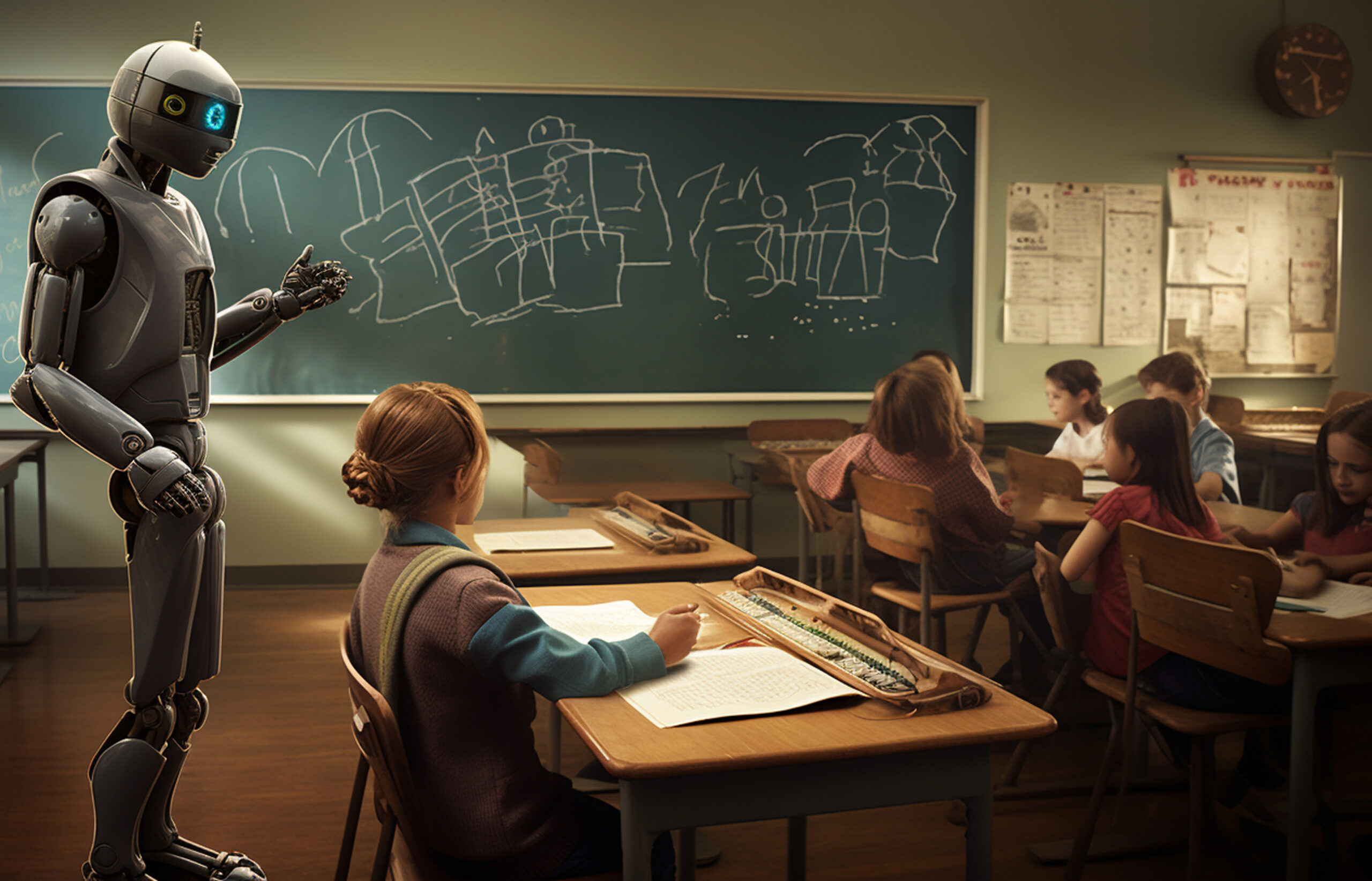
But now we are living in a very different moment. Artificial intelligence has entered the world of education and it is moving fast. Today, a student can ask a machine to explain a grammar rule, generate vocabulary exercises, or even correct a short essay in seconds.
So here is the uncomfortable question many teachers are quietly asking.
If a machine can explain grammar, create exercises, and correct writing, what exactly is the teacher supposed to do?
As an ESL teacher, I have thought about this a lot. At first, I felt the same worry that many educators feel. Technology always brings a little fear with it. Every new tool makes us wonder if our role is slowly shrinking.
But the longer I work with AI, the more I realize something important.
AI can help with teaching. It cannot replace teaching.
Let’s be honest for a moment. Some parts of our job were always mechanical. Creating twenty extra sentences to practise the past simple. Writing another worksheet on prepositions. Correcting the same spelling mistakes again and again. These tasks take time and energy.
AI is extremely good at these kinds of jobs. It works quickly. It never gets tired. It can produce hundreds of practice sentences in seconds.
And frankly, I do not miss doing all of that myself.
But the truth is that teaching was never really about worksheets. The real work of a teacher happens in the small, human moments that technology cannot fully understand.
A machine can explain the present perfect. But it cannot see the confused look on a student’s face when the explanation still does not make sense. It cannot notice when a shy student finally gathers the courage to speak for the first time in class.
Teachers see these things every day.
In my classroom, I often notice tiny changes that no algorithm would detect. A student who suddenly starts participating more. Another who becomes quiet and withdrawn before an exam. A learner who laughs proudly after using a new expression correctly.
These moments are the heart of language learning.
Language is not just grammar rules and vocabulary lists. It is communication. It is emotion. It is culture. It is the awkward but wonderful process of expressing yourself in another language.
Machines can simulate conversation, but they cannot truly participate in the human energy of a classroom. Anyone who has watched students perform a role play or argue passionately during a debate activity knows that something special happens in those moments.
Students are not simply practising English. They are discovering their voice.
Another important role of the teacher is guidance. Today, information is everywhere. Students can search for grammar explanations, watch online lessons, and ask AI tools for instant answers. The problem is no longer access to information.
The problem is knowing what to do with it.
Students often receive too much information and not enough direction. That is where teachers become more important than ever. We help learners organise knowledge, practise it meaningfully, and apply it in real situations.
Think about writing tasks. A machine can correct grammar mistakes, but writing is more than grammar. Students need help developing ideas, structuring arguments, and expressing opinions clearly. They need feedback that encourages them to think deeper, not just fix errors.
There is also the question of honesty and responsibility. Students today must learn how to use AI tools ethically. When is it acceptable to use technology for help? When does it become cheating? These conversations cannot be solved by software.
They require teachers who guide students through these decisions.
Interestingly, AI may actually push teachers toward the most meaningful parts of the profession. If machines can handle repetitive tasks, teachers can focus more on creativity and communication. We can design discussions, projects, presentations, and collaborative activities that make language come alive.
Instead of simply delivering information, we become facilitators of real learning.
In the ESL classroom, this shift is powerful. Language grows through interaction. Through mistakes. Through laughter. Through the sometimes messy but exciting process of trying to say something new.
No technology can fully recreate that experience.
There is another truth every teacher knows. Students do not work hard only because of exercises or technology. They work hard because someone believes in them. Because a teacher encourages them when they feel stuck.
I cannot count how many times I have heard a student say, “My English is terrible.”
And I always answer the same way.
“Not yet. Keep going.”
That moment of encouragement matters more than any worksheet or automated correction.
So what does teaching mean in the age of artificial intelligence?
For me, it means adapting without losing what makes teaching human. It means using technology as a helpful tool, not as the center of the classroom. It means focusing on critical thinking, communication, and confidence.
AI can generate exercises. It can analyse sentences. It can explain grammar rules very well.
But it cannot inspire a student.
And at the end of the day, that is still the teacher’s job.