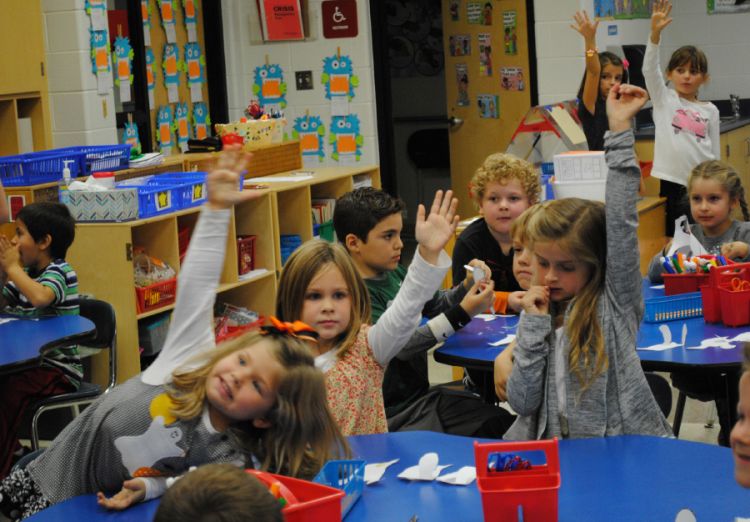
When teachers go loosely with their book and sneak in supplementary material which is aligned with their teaching objectives, motivation levels of students are better. When this supplementary material is integrated into lesson plans after being tailored to students’ interests, abilities and learning styles the curriculum is enriched and students have real-world context. The fragile balance between passive and active students’ class presence is better kept.
Undoubtedly publishing companies offer supplementary material. They provide online links, multimedia resources, authentic texts, video clips, games, interactive online platforms and apps. They offer online quizzes and self-assessment tools for students to track their progress, point systems and badges for when they complete mission tasks and collaborative quests. Also, AI Chat GPT promises, on the spot, free, tailored guidance. It seems we are drowning for options.
Deciding what supplementary materials to use is simply hard. First of all, which sector will it come from? From the realm of literature, environment, science, fashion, technology, health to mention but a few? Will it be in the form of a documentary, a multimedia presentation, a link of an educational You Tube channel, a Podcast, a TED Talk, a News broadcast, a clip from a Movie or TV show? Will this material be on par with the linguistic level of students?
My suggestions of supplementary material only scratch the surface of the matter.
- Extensive reading material.
Extensive reading is top on my list because it gives high level of exposure to the foreign language and Steven Krashen has researched and documented this fact. Of course, incidental vocabulary acquisition from context happens when the student already knows enough vocabulary. So, graded readers, especially those with audio and online resources, work well with students with as little as 2000 active vocabulary. If the topic of the reader which the teacher has chosen relates to students’ interests and is appropriate to their linguistic level, students stay engaged while they read, listen or play with the material at hand. Their vocabulary and structure greatly benefit. To make sure that students have indeed done their reading, teachers usually ask for some form of “homework” of the following type:
- writing a ‘diary’ for one of the characters and retelling the story from their point of view.
- Doing a summary of the story with some factual mistakes for the class to correct.
- Completing a character review sheet or writing an analysis of the main characters, drawing their similarities and differences.
- Asking learners to find who said which line of dialogues.
- Writing a paragraph on how the characters change during the book.
- Researching and presenting worthy role models.
At the tender age of adolescence, youngsters are in search of orientation. Everybody is inspired by somebody. The idea is to research role models and the context of their lives and teach others about them highlighting how they left their mark in our world. Why is this person a shining example? Does s/he illustrate creativity, tolerance, courage, sensitivity, intelligence, leadership? Supplementary material of this type steers students’ attention away from influencers or celebrities or glamorous stars of questionable value.
Once students have singled out a healthy mentor, they can stage “an interview”. This mentor could be a businessperson, a scientist, a writer, a neighbor who commits time to volunteering, a young woman from Iran who has been tortured for refusing to wear the burka. Students work in groups, collaboratively research, gather evidence, adjust it, sketch out the questions and choreograph the whole interview. They then act in roles, dress and speak accordingly and create the context of a make-believe TV studio. Students leave aside their books for a little time and become context creators and presenters.
- Reporting world events
Staging a “news bulletin” is another way to supplement class routine. Naturally, the news items could be relevant to the subject matter of the Unit or to current events. The news reel could range from weather forecasts to environmental or sports or police or entertainment events, relevant to the age and linguistic aptitude of students. Students can use Passive voice and make the bulletin formal. In their role of newscasters, students can put grammar to practice as they report that in the train derailment, for example, train seats were broken, windows were smashed and people were injured. Students will work in groups, read supplementary material on the topic of their interest, research, prepare the texts to be broadcast and check details concerning the “newscasters”, the background decoration and microphones.
4. Teaching others
Reading or listening are learning activities which are reinforced when students are engaged with the information they get. And one excellent way to engage with what one reads is to teach others what one has learned by discussing and demonstrating what one has learned. When we assign 6th graders to go to a class of 4th graders for example and teach an item, we are facilitating learning in both ends of the stick. The younger kids are delighted, more energized and feel relaxed to learn from older kids. Older kids have to really get to grips with the subject matter to successfully get it across to the younger ones. It works both ways. Presenting what one has learnt from research is not plain sailing because one has to recall the information. “The more effort one puts into recalling a piece of information or executing a skill, the more this act benefits the learning”from Make it Stick: The Science of Successful Learningby Peter C. Brown, Henry L. Roediger III and Mark A. McDaniel).
5. Engaging in Speaking Activities.
Teenagers never get enough of talking about identity and Social and Emotional matters. They struggle to find their personal compass, to learn about themselves and others. Adolescence is a time of heightened friction and the issues which arise can be smoothed out with verbal interaction in group activities. Teachers can give students conversation cards prompts on topics like: being reactive or proactive, prioritizing, goal setting, distinguishing the important from the trivial, wise decision making, developing a growth mindset, giving positive reinforcement, avoiding procrastination and self-sabotage, fixing mood swings, resisting peer pressure, being grateful, being empathetic not self-centered, feeling the need to belong, to fit in. The list is long and these topics are best illustrated through stories.
Supplementing class routine with activities maintains students’ interest, adds diversity to the learning experience and keeps motivation in the learning process going. All in all, interactive and engaging supplementary content helps reinforce language concepts and makes the learning experience more enjoyable.