QLS’s Approach to Boosting Teen Conversational Skills
Have you ever stepped out your teen classroom for a minute or two to answer an urgent phone call or talk to an important visitor? –I’m sure you have. It happens to all of us. And what happened while you were away? Was there noise? Laughter? Disruptive behavior?
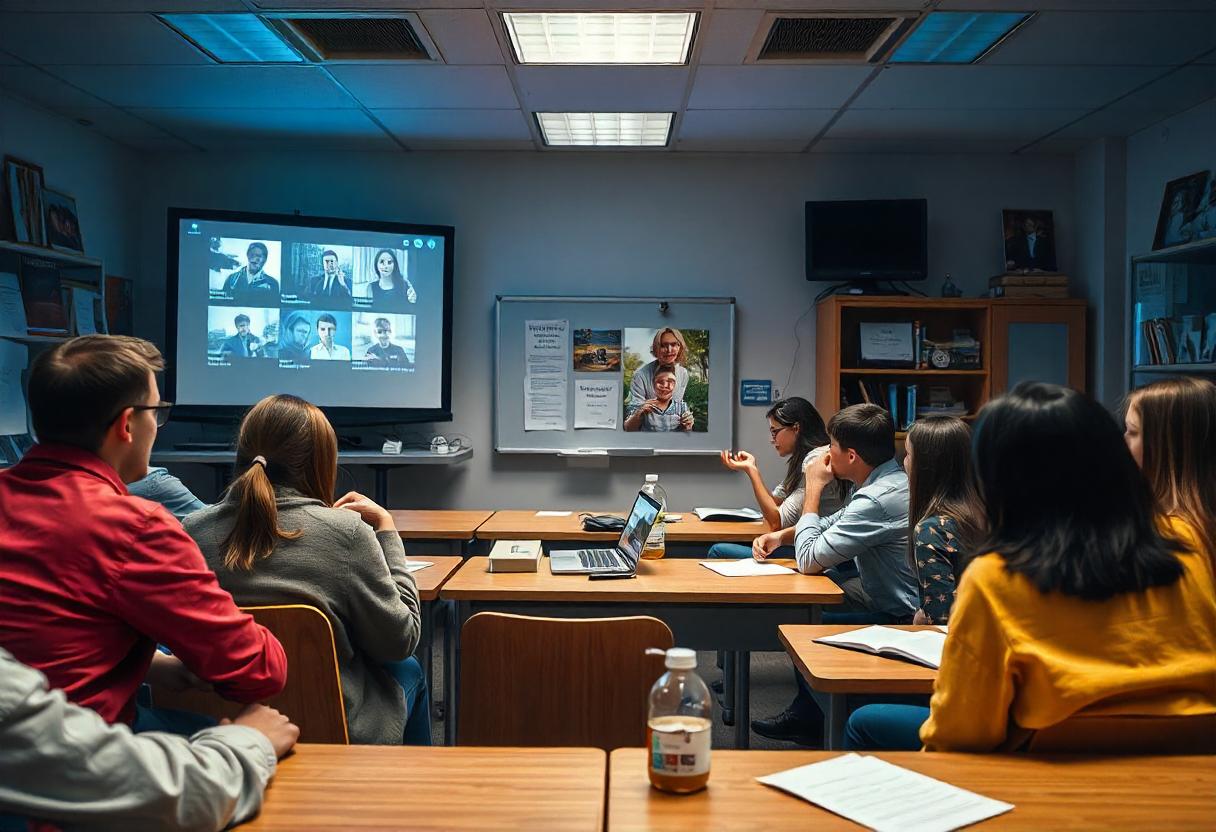
That would have been the case a decade or so ago. But not nowadays. Whenever I have to step out of the classroom for a phone call, my class of teens stays silent. Not a sound is heard while I am away. As a matter of fact- I could be away for the whole session and nobody would come out to seek me! Yes- you guessed right: I allow mobile phones in class. Some of my adolescent students need to be in contact with their parents and, if I want to be honest, I am tech friendly, I somehow always think we will use the mobile phones to search the internet on something, play Kahoot or do a mentimeter survey. But whenever I am away from class for a few minutes they just scroll, text, like things and wish it would take me some time to get back.
This silence really got me thinking. Don’t they have anything to say to each other? I asked them: “Why aren’t you talking to each other?”. Their answer shocked me even more than their silence. “We don’t have anything to say to each other”. “What should we talk about?” And then it dawned on me: “I have to prepare these students for the oral exam for their certifications?!”
I must also make clear here that I LOVE adolescents. I have always thought of them as the most original, unspoilt part of our societies. Described perfectly in this quotation.
“Teenagers carry the fire of change — bold enough to question, brave enough to dream, and original enough to reshape the world in their own voice.” —Unknown
So why are our teens silent?
It is a fact that the teenagers of today have limited skills of face-to-face interaction and communication due to extensive use of screens through which they interact with their peers and others. There are numerous studies that prove and elaborate on that. Social media, texting rather than face-to-face communication have caused serious consequences in the social and developmental skills of teenagers.
Our role here is not to focus on that – although it is an issue that needs to be addressed by both families, schools, societies and science.
Our role here is to prepare those students for the oral exam! Or better – if we want to be real teachers and not just prep schools- to help them express themselves, teach them to converse, argue, share opinions and feelings in a face-to –face situation and not through a screen. It is actually a life skill we are teaching and not an exam skill.
So, in QLS, our quest began to find ways to make those teenagers express themselves, and as a result be better prepared for the real world and the exam! Let’s not forget that.
Viewpoints Speaking Sessions
VIEWPOINTS by QLS is a toolkit that does exactly that. It is based on using photos to express thoughts and feelings. I wouldn’t attempt to use the word “phototherapy” as we are definitely not doing therapy of any sort. The only reason I use this term is to elaborate on the method of using photographs, generic and well chosen, as a medium of expression.
Our speaking Viewpoints sessions begin with a short story, carefully chosen from the book of stories of the Viewpoints method, which are related to the issue we are addressing each time. Then on a specific layout chart, we ask teens to elaborate on certain questions, describing orally 3 different photographs they choose from the VIEWPOINTS pack. They need to describe the photographs making inferences about their background and give possible explanations as to what may have happened before or after the snapshot. Then they need to elaborate on how these photographs are related – or not -to their experiences. Questions and issues are carefully chosen by experts on the field- communication coaches – who assisted us teachers to ask the specific questions that will make our students speak. Questions are always related to their personal views, opinions and feelings –even memories- and they do work! Teens do speak, shyly in the beginning, with a sense of wonder, but once they get the hang of it, they enjoy it, bond and even discover things about themselves and their classmates. It is very obvious to us teachers that they have never been exposed to speaking sessions like these before, the whole experience is new to them. This is what makes our VIEWPOINTS toolkit unique and worthwhile as it provides our students with certain life skills that go beyond language speaking practice.
Do they all enjoy these speaking sessions? Are there students who refuse to speak and share? No and yes. Some students are not ready or willing to share and speak so they just answer briefly and refuse to elaborate. But since students speak in small groups and the teacher is monitoring and not participating in the conversations, they eventually open up to their peers. Once a student starts speaking and sharing, the others join in and some even enjoy sharing their thoughts and experiences. Even those with less participation gain something by watching others do it. Eventually they open up and in the next session even more so.
The teacher as monitor
Communication experts have created detailed lesson plans for us teachers giving us step- by –step guidelines on how to monitor the sessions and ground rules that we all have to abide to (what is said in the sessions stays in the sessions). The same experts helped us pick the topics of the speaking sessions of VIEWPOINTS which include topics such as “New Beginnings”, “We –me together we thrive” , “Self-Acceptance”, “I am not giving up” and more.
As teachers, we also want to ensure our students leave each session with clear outcomes that reflect meaningful communication and personal engagement they shared during the session. So, every session ends with a short-written production—typically in the form of an action plan or reflective plan—that students can take with them. This not only reinforces their learning but also encourages ownership and practical application of their thoughts beyond the classroom.”
Oral Exams
Once we have got our students actively speaking and sharing, we can extend this method to exam preparation. Layout charts allow us to adapt the VIEWPOINTS approach to develop exam-related skills and strategies. These visual tools provide both the language support and expressions that are required in speaking exams, particularly those involving photo description and situational tasks based on images. VIEWPOINTS offers carefully selected visuals along with language input, giving students the tools and confidence needed to perform effectively in exams as well as achieve important life skills.
Conclusion
By integrating targeted speaking practice through the VIEWPOINTS Speaking Toolkit, we create an environment where adolescents can share and communicate safely. Students not only develop their communicative life skills but also build practical exam skills in a structured and supportive environment. This approach ensures that the speaking sessions leave learners with something concrete—language they can use, confidence they can build on, and a clear sense of progress.