Sponsored by LANGUAGECERT
Coursebooks play an important role in language classrooms. They offer structure, progression and a sense of security for both teachers and learners. However, when they are treated as scripts to be followed page by page, they can limit learner voice,
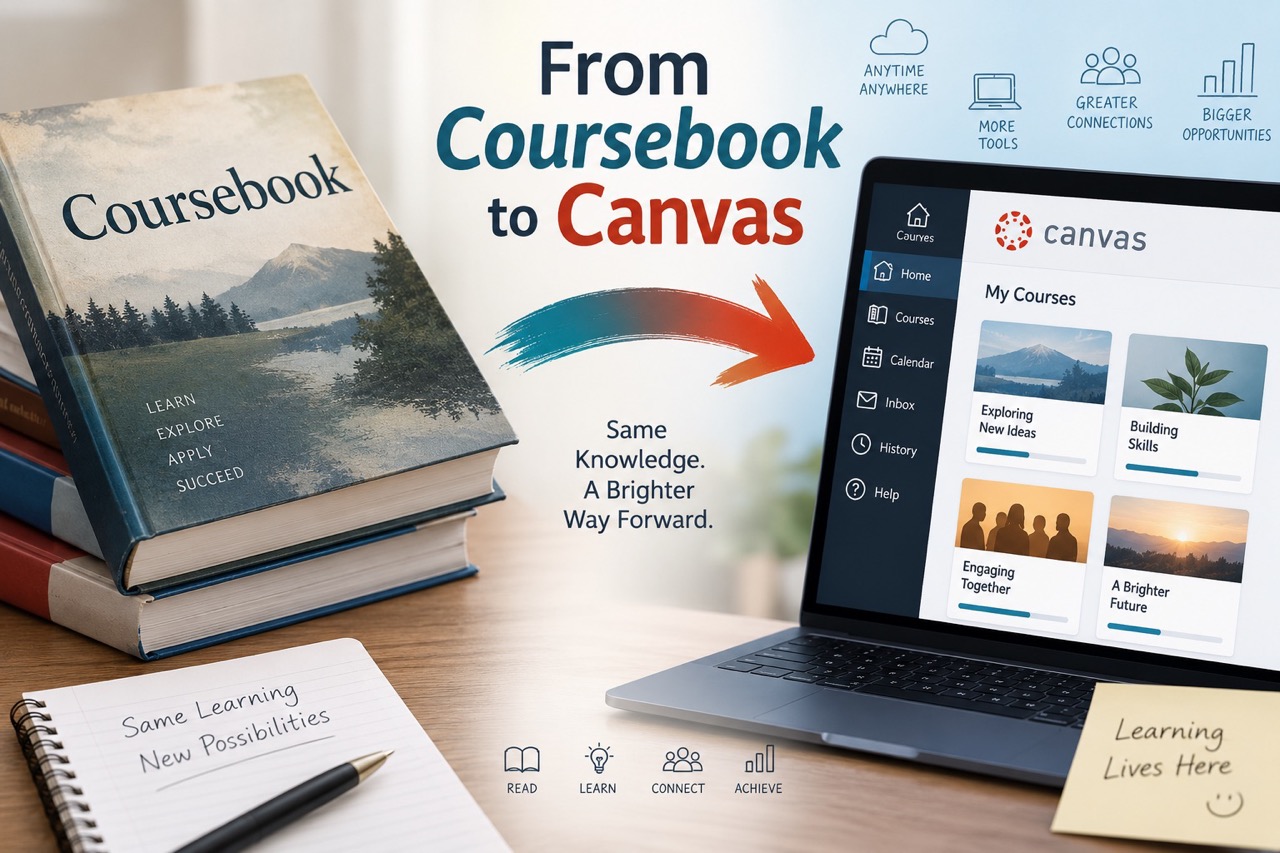
creativity and meaningful engagement. A more humanistic approach invites teachers to see the coursebook not as the lesson itself, but as a starting point. The metaphor From Coursebook to Canvas captures this shift: the page becomes a space where teachers and learners co-create learning experiences, bringing identity, emotion and real life into the classroom.
Humanistic approaches to language education emphasise the learner as a whole person, whose feelings, motivations and personal experiences shape learning (Brown, 2007). From this perspective, teaching is not simply about delivering content, but about creating conditions in which learners feel seen, valued and engaged. This view aligns naturally with the idea of humanising the coursebook: moving beyond exercises on the page to create moments of connection, reflection and meaning.
The teacher as an artist: three mindsets
Seeing the teacher as an artist working with a canvas highlights teacher agency and creativity. This metaphor can be made practical through three complementary mindsets: Curator, Designer and Guide.
As Curator, the teacher chooses what truly matters. Coursebooks often contain more material than can realistically be covered in a lesson, and time becomes both a constraint and a teacher in itself. Curating means prioritising tasks that serve learning goals, skipping or shortening activities that add little value, and selecting content that connects with learners’ lives. This mindset values depth over coverage and recognises that meaningful learning happens when there is time for thinking, discussion and reflection.
As Designer, the teacher adapts and adds value. Tasks are not fixed; they can be reshaped to fit learners’ needs, levels and contexts. Instructions can be simplified, tasks broken into clearer steps, and examples localised using familiar names,
places, food or music. Passive activities can be turned into opportunities for speaking, thinking and creativity. Designing in this sense does not require extra materials or heavy preparation, but a willingness to see each page as flexible and open to interpretation.
As Guide, the teacher leads learning with purpose. Rather than moving mechanically from exercise to exercise, the teacher makes learning goals explicit and structures the lesson as a journey. This might involve inviting predictions before reading or listening, guiding learners through comprehension, and creating space for reflection afterwards. Asking “Why do you think…?” or “What do you think about…?” encourages learners to go beyond finding the right answer and to engage with meaning. This aligns with a humanistic view of teaching as relational and dialogic, where learners’ voices and perspectives matter.
Turning pages into people
Humanising the coursebook means transforming tasks into experiences and pages into people. Small shifts in how activities are framed can significantly change the quality of classroom interaction. For example, asking learners to write questions based on a unit title before going into the unit builds curiosity and gives them a sense of agency. Inventing a backstory for a person in a photo turns an image into a human presence, opening space for empathy and imagination.
Reversing the usual order of comprehension tasks by inviting learners to write interview questions before reading or listening reframes texts as voices to be engaged with, rather than information to be extracted. Picture dictation, where learners draw an image from the coursebook described by the teacher before comparing it with the original, sharpens attention and appeals to different learning styles. Adding a simple “Why do you think…?” question to comprehension tasks deepens thinking and invites interpretation.
Even grammar and vocabulary can be humanised. Rewriting example sentences with local places, music or food makes language more relevant and memorable.
Turning a writing task into a short role-play allows learners to embody the language they have produced. Vocabulary lists can become playful through quick games that add energy and interaction. These small adaptations create space for identity, voice
and emotion, aligning with Brown’s (2007) emphasis on affect and motivation as central to learning.
Depth over coverage
A humanistic stance encourages teachers to value depth over coverage. The pressure to “get through the page” can reduce learning to task completion, leaving little room for reflection or personal connection. Choosing to explore fewer tasks more deeply, and to adapt them in ways that invite learners’ experiences and opinions, supports more meaningful engagement. This approach recognises that learning does not reside in the printed exercise itself, but in what learners are invited to bring to it.
Conclusion
Moving from coursebook to canvas is not about rejecting coursebooks, but about reclaiming the teacher’s role as a creative, reflective professional. Through the mindsets of Curator, Designer and Guide, teachers can transform pages into spaces
for connection, curiosity and meaning. Grounded in a humanistic view of learning, this shift reminds us that we do not teach pages.
We teach people. The coursebook is the starting point; the canvas is what we create with our learners.
References
Brown, H. D. (2007). Principles of Language Learning and Teaching (5th ed.).
Pearson Education.
Ur, P. (2012). A Course in Language Teaching: Practice and Theory. Cambridge
University Press.