Artificial intelligence has become integrated into daily life with the force of a cultural phenomenon. Back in 1956, when John McCarthy coined the term during the Dartmouth Summer Research Project on Artificial Intelligence, this field of research was a far-fetched concept (Stanford University). However, since November 2024, when this new technology gained worldwide recognition, its progress has been remarkable.
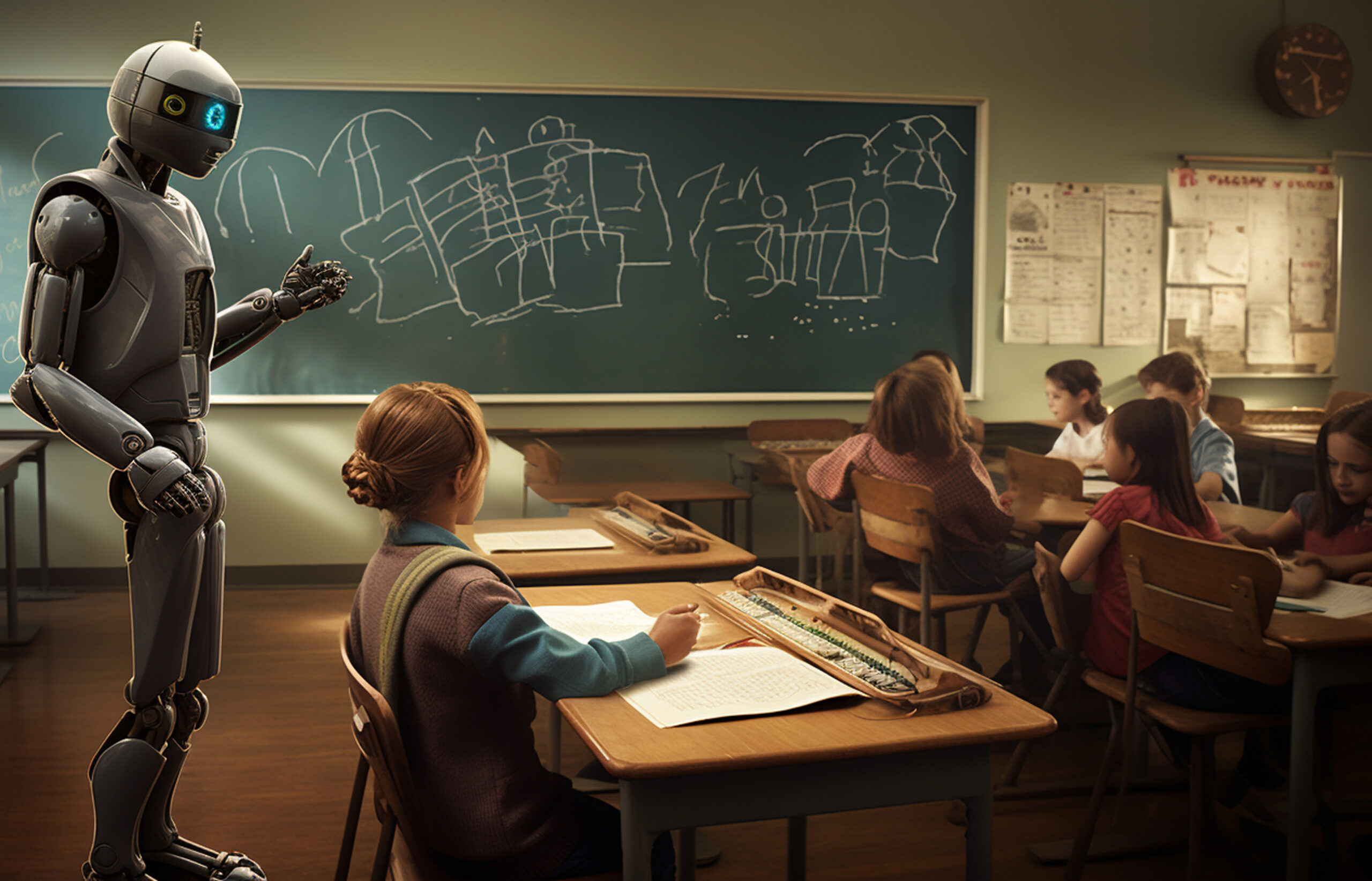
Inevitably, it was only a matter of time before it was applied within the field of education. Frequently discussed with a mixture of excitement, anxiety, and resignation, AI is commonly framed as a tool designed to enhance our teaching, one that we must embrace. However, when trying to move beyond general discourse and engage in a critical examination of my very own professional practices, the question becomes more grounded: What has AI actually changed in my teaching, really? And, more importantly, what should we protect, and what should we let go of, as this technology becomes part of our pedagogical landscape?
On a personal level, perhaps the most immediate shift has been in the preparation process. Although AI has neither replaced my planning, nor my responsibility to think pedagogically, it has certainly taken away some of the administrative hassle involved. Without a doubt, the ease with which the scaffolding phase (Wood et al.) can now be carried out cannot be stressed enough. Drafting rubrics, generating variations of exercises, or producing differentiating material now takes minutes instead of hours, allowing educators to focus on equally demanding parts of teaching, such as anticipating misconceptions, or thinking about how students will engage with the material, not only intellectually, but also emotionally.
Another significant change AI has also brought about is the rhythm of feedback. Instead of waiting for the next class, students can receive instant guidance from AI tools. This has created a new pedagogical layer, where they can experiment more freely and revise more willingly before submitting their work. This space before formal intervention grants them the opportunity to engage more actively in the learning process and delve deeper in some serious critical thinking processes. I do not argue that this will instantly turn learners into better writers or thinkers by default, but it certainly facilitates what Sifakis (2023) calls a deeper metacognitive awareness.
That being said, one must also consider that AI has shifted the emotional landscape, leaving students feeling both empowered and unsettled. Despite their clear understanding of AI’s constant presence and potential, they view the future with uncertainty and sensing changes all around them. The teacher’s role, thus, has expanded to also help them navigate this uncertainty, not by offering definitive answers, but by encouraging curiosity and fostering ethical awareness.
Perhaps the first thing that calls for our attention is the need to protect the human encounter and situate it right at the heart of teaching. Although AI can mimic explanations, it cannot replicate the relational dimension of learning. Elements such as adjusting one’s tone, sharing humour, noticing when a student is struggling, or experiencing a classroom’s sense of community, are beyond AI’s abilities and cannot be simulated.
We must also safeguard interpretive labour, the intellectual and emotional work involved in understanding and analysing information, experiences and interactions within education (Ghyasi and Gurbuz). AI can indeed summarise, paraphrase, and even mimic analytical prose, nonetheless, it cannot experience the -sometimes- uncomfortable process through which students learn to engage deeply with material instead of simply relying on automated inputs. Therefore, we run the risk of depriving students of the very struggle that forms them as thinkers.
Finally, we must protect the ethical imagination. While AI can produce content, it cannot cultivate responsibility, empathy, or judgment, qualities that emerge through dialogue, reflection, and exposure to difference. These traits are uniquely humans and take time to grow.
One of the most important things we need to let go of is the idea that teaching is primarily about delivering information. AI is now better at retrieving facts, generating examples, and producing explanations on demand. This should liberate us from the pressure of being walking encyclopaedias and make us concentrate on acknowledging that our value lies in modelling thinking, in designing learning experiences, in cultivating intellectual character.
We can also let go of rigid assessment practices that concentrate on memorisation or formulaic writing. Instead of clinging onto such practices, we can design material that foreground originality, reflection, and collaboration.
Finally, perhaps we need to confront our fear that AI will make educators obsolete. In the history of education, none of the technological advancements -the printing press, the blackboard, the internet- managed to erase the teacher. AI should be no different. It will reshape our work, but it will not replace the relational, ethical, and interpretive dimensions that define our profession.
All things considered, AI has changed my teaching, but not in the ways the hype suggests. Instead of automating my role, it has facilitated and illuminated it, making visible what is mechanical and what is irreplaceably human.
References
Ghyasi, Majid, and Nurdan Gurbuz. “Emotional labor and emotional capital: An interpretive phenomenological analysis of teachers of English.” PloS one, vol. 18,4 e0283981. 27 Apr. 2023. doi:10.1371/journal.pone.0283981
Sifakis, Nicos. “Metacognitive and metalinguistic activities can raise ELF awareness: why and how.” Journal of English as a Lingua Franca, vol. 12, no. 1, 2023, pp. 43-66. doi.org/10.1515/jelf-2023-2006
Stanford University. “Artificial Intelligence and Life in 2030.” One Hundred Year Study on Artificial Intelligence (AI100), September 2016. https://ai100.stanford.edu/2016-report/overview
Wood, David, et al. “The Role of Tutoring in Problem-Solving.” Journal of Child Psychology and Psychiatry, Vol. 17, pp. 89–100.