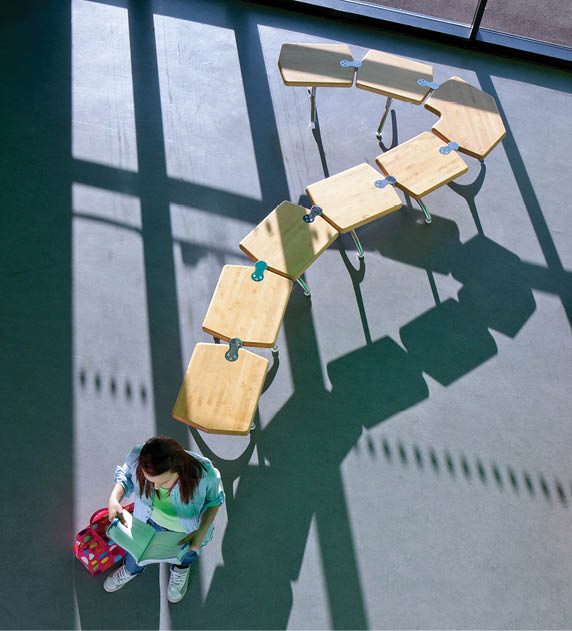
A student walks into school already exhausted. Not physically, but neurologically. Before the first lesson even begins, the brain has already processed stress, overstimulation, social pressure, transitions, expectations and emotional uncertainty. Yet in most classrooms, learning is expected to begin immediately. Open your books. Focus. Achieve.
For a long time, I believed that if lessons were organised and academically engaging, learning would naturally follow. However, working closely with students with ADHD, dyslexia, anxiety and diverse learning needs completely changed the way I see classrooms. I gradually realised that some students were not struggling because they were unwilling to learn. They were struggling because their brains were overwhelmed before learning could even begin.
Modern education still treats learning as though it is purely intellectual. Neuroscience suggests otherwise. Educational neuroscientist Mary Helen Immordino Yang (2016) explains that emotion is deeply connected to attention, memory and meaning making. Students do not simply think their way through school experiences. They feel their way through them.
This has become increasingly visible in classrooms across the world. Teachers are witnessing rising levels of anxiety, emotional fatigue and sensory overload among students. For many learners, especially neurodivergent students, the greatest barrier to academic success is not ability. It is regulation. And yet, regulation is rarely treated as part of the curriculum itself.
This is why I believe schools of the future will need what I call a “nervous system curriculum”. By this, I do not mean replacing academic learning with emotional support. I mean recognising that emotional regulation, psychological safety and cognitive readiness are necessary conditions for meaningful learning to happen.
Interestingly, some of the world’s most successful educational systems already reflect this understanding. In Finland, schools intentionally build recovery time into the day through frequent breaks and lower stress learning environments. In Japan, predictable routines and collective responsibility strengthen belonging and reduce transition anxiety. Meanwhile, many Australian schools have integrated mindfulness, sensory regulation and movement based learning into everyday teaching practice.
These approaches may look different in practice, yet they are all built on the same understanding: regulation supports learning.
Although culturally different, these approaches share one important principle: students learn more effectively when they feel emotionally safe.
This aligns closely with Stephen Porges’ Polyvagal Theory (2011), which explores how feelings of safety influence emotional regulation and attention. When students feel overwhelmed or emotionally unsafe, the brain prioritises survival responses rather than higher order thinking. What appears in classrooms as distraction or disengagement is often neurological overload.
Understanding this transformed my own educational practice. Earlier in my career, I focused heavily on lesson delivery and classroom management. If students appeared distracted, my instinct was often to increase structure or redirect behaviour more firmly. Over time, however, I realised that many students were moving through the school day without enough opportunities for regulation or recovery.
As a result, I began preparing classrooms differently. Before preparing academic materials, I now prepare regulation systems: predictable transitions, visual schedules, calm entry routines, movement opportunities and low stimulation reflection spaces. I think carefully about what students will feel when they enter the room. Will the classroom increase stress, or will it quietly communicate safety and belonging?
Research on cognitive load theory supports this perspective (Sweller, 1988). When working memory becomes overloaded through stress or overstimulation, students struggle to process and retain information effectively. This is particularly important for students with ADHD, dyslexia, autism spectrum conditions and anxiety related challenges.
Current research in neuroscience and cognitive psychology challenges one of education’s oldest assumptions: that behaviour management alone creates successful classrooms. Instead, evidence increasingly suggests that emotionally responsive environments create the neurological conditions necessary for learning to occur.
As education continues adapting to the realities of the modern world, emotional regulation can no longer remain hidden in the background of educational conversations. Because before students can analyse, memorise, calculate or create, their nervous systems must first feel secure enough to engage.
Perhaps the most powerful classrooms of the future will not simply be the most technologically advanced. They will be the ones that understand a profoundly human truth: before students can learn deeply, they first need to feel safe enough to belong.
References
Immordino Yang, M. H. (2016). Emotions, Learning and the Brain. W. W. Norton & Company.
Porges, S. (2011). The Polyvagal Theory. W. W. Norton & Company.
Sweller, J. (1988). Cognitive Load During Problem Solving: Effects on Learning. Cognitive Science, 12(2), 257–285.