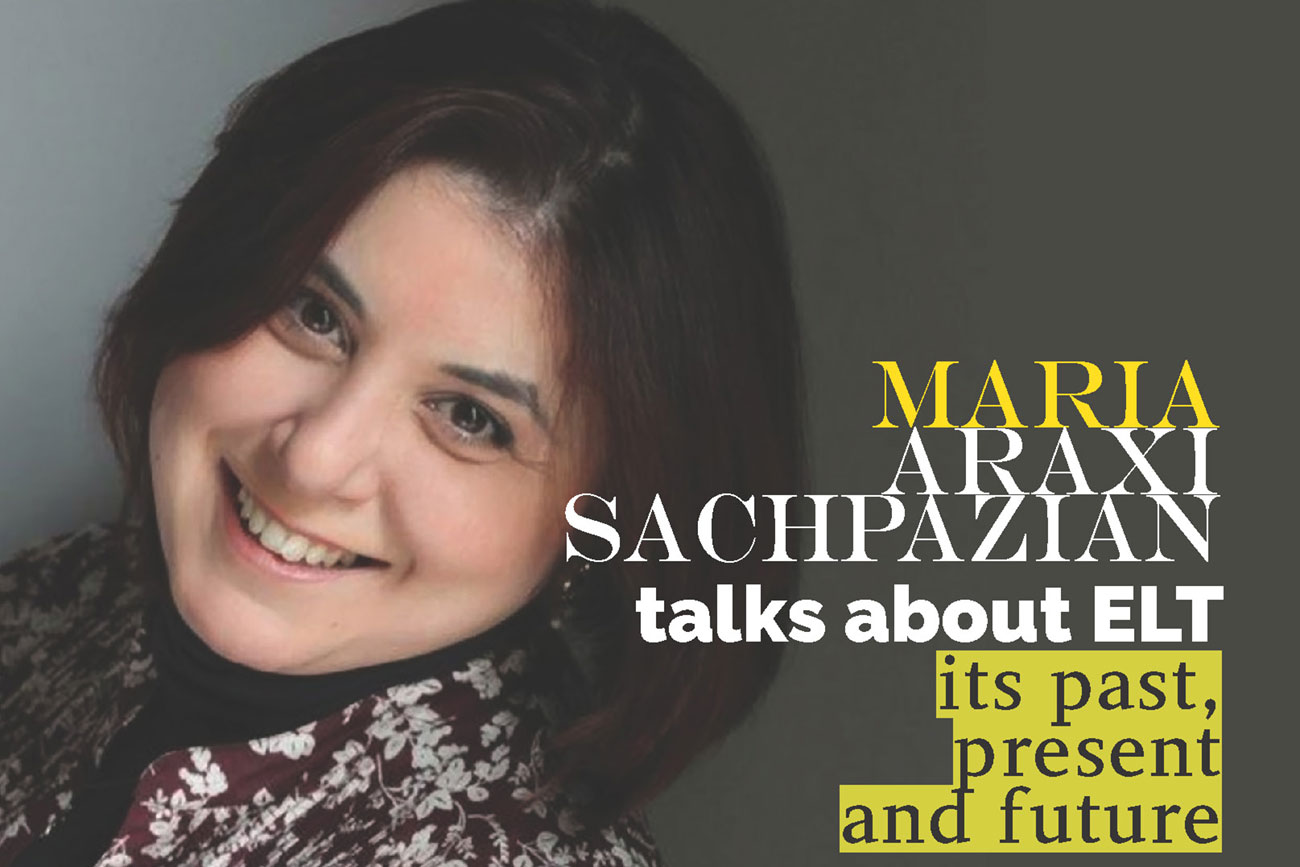
Ioanna Zafeiriou is a secondary-school English teacher and education innovator known for projects in digital learning and sustainability in language education. She has been in the Top 50 finalists for the Global Teacher Prize (often called the “Nobel Prize for Teachers”), she has received the Education Leaders Awards 2024 – “Teacher of the Year”, multiple ELT Excellence Awards for innovative English teaching methods and has been finalist in GESS Education Awards for innovative educational projects.
Ioanna holds an MA in ICT in Education – King’s College London and has received, extensive training in digital learning tools, Web 2.0 educational platforms, AI applications in education and robotics and 3D printing in classrooms.
- You have received significant recognition for your work in ELT. What originally inspired you to become an English teacher, and what continues to motivate you in the classroom today?
My journey with languages began very early. My mother was an English teacher, so I grew up surrounded by English storybooks, songs, and videotapes. Those early experiences made language learning feel exciting rather than difficult. At school I found English enjoyable and easy to learn, and gradually I realised I wanted to share that same sense of discovery with others.
Studying English Language and Literature at university deepened my understanding of language as a bridge between cultures. I also studied other languages -French at school and Spanish at university- which broadened my perspective and reinforced my belief that language learning promotes openness and understanding.
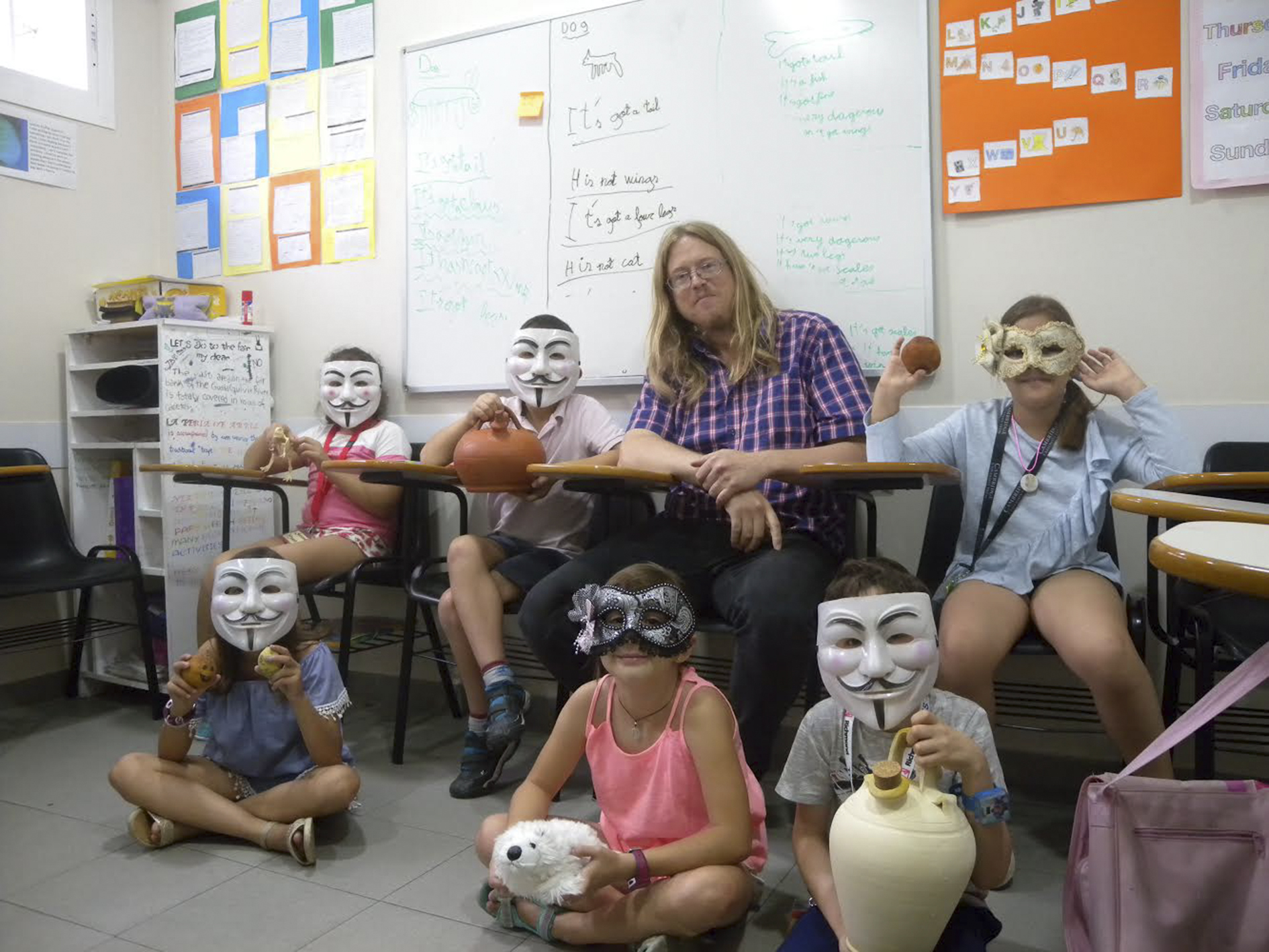
What motivates me most today is my students. After twenty years in state education, I still see the classroom as a place full of possibilities. When students engage with an idea, express their opinions in English, or realise that their voices matter, it is incredibly rewarding. I am inspired to see them grow not only linguistically but also personally developing confidence, curiosity, and a sense of responsibility toward the world around them.
- Your teaching integrates sustainability themes into language learning. How can environmental and global citizenship topics enrich the EFL curriculum?
Language learning becomes more meaningful when it connects with real-world issues. Environmental and global citizenship topics give students a genuine reason to communicate, express opinions, and engage with authentic material.
When students explore issues such as climate change, sustainable fashion, or forest protection, they are not just practising vocabulary or grammar. They learn to analyse information, discuss ideas, and understand how their actions affect the wider world.
These themes also develop empathy and responsibility. In class we discuss how local actions can have global consequences, helping students see themselves as global citizens. Through projects such as Fluent in Green, language learning becomes connected with real-world awareness and positive change.
- Technology plays an important role in your projects. How do digital tools and emerging technologies help students develop both language skills and 21st-century competencies?
Technology allows me to create a more interactive and flexible learning environment, combining classroom teaching with digital tools through a blended learning approach.
My approach is rooted in my Master’s in ICT Education from King’s College London and guided by a strong commitment to lifelong learning. I use a wide range of Web 2.0 tools to support language development, while my interests also extend to immersive technologies, STEM, robotics, and 3D printing, areas I consider essential for preparing students for a high-tech future.
I am also a strong advocate of AI tools in education. I increasingly use AI to generate teaching material and introduce students to these tools in a responsible and creative way. Learning to write effective prompts, for example, can become a powerful exercise in clarity, creativity, and critical thinking.
- Your project “Fluent in Green” has gained international attention. Could you tell us how this idea was born and what impact it has had on your students?
Fluent in Green: Integrating Sustainability into the EFL Curriculum was born out of my belief that language education should engage with the most pressing challenges of our time. Environmental issues, in particular, resonate strongly with young people, as they are the ones who will shape and be shaped by the future.
The project brought together students from three schools and focused on two key themes: fast fashion and forest conservation. Students explored the environmental and social impact of the fashion industry, investigated sustainable alternatives, and even designed an eco-friendly fashion show. They also examined the importance of forest protection, especially in light of the devastating wildfires Greece has experienced.
Through research, webquests, creative activities, and artistic tasks such as blackout poetry, students engaged with these topics in English while developing critical thinking skills. The project also extended beyond the classroom, including real-world actions such as tree planting, a fire-safety event, and a visit to a recycling park.
We presented the project at the Student Short Film Festival in our community and participated in the Bravo Schools Competition for the 17 Global Goals, sharing our work with a wider audience. It was also featured on the global map of the World’s Largest Lesson and shortlisted for the Community Award for Citizenship at the Global GESS Education Awards 2024, highlighting its impact both nationally and internationally.
- Many teachers are interested in project-based learning but feel unsure about how to start. What practical advice would you give them?
My advice is simple: start small and choose a topic that genuinely interests your students.
Project-based learning does not have to be complicated. Even a short project can make a real difference. The key is to give students the opportunity to explore a topic, collaborate with others, and create something meaningful whether it’s a presentation, a poster, a video, or a piece of digital work.
Digital tools like Padlet can help organise collaboration, but they are not essential. What matters most is meaningful engagement.
It is also important to give students a real audience. When they know their work will be shared at a school event, a competition, or within the community, their motivation and sense of purpose increase significantly.
- Being recognized among the top teachers globally is a remarkable achievement. How has this experience influenced your perspective on education and the role of teachers today?
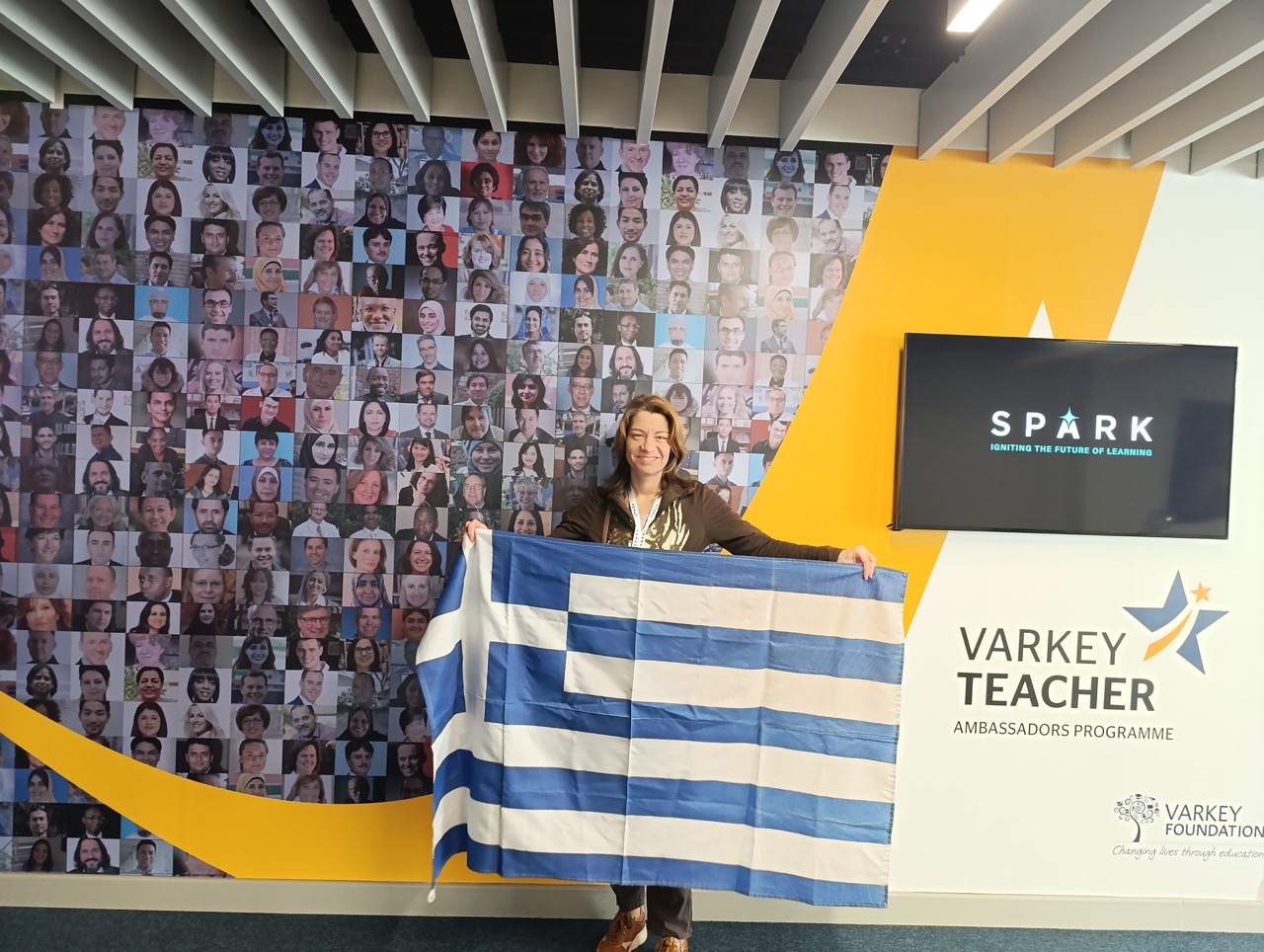
Being selected among the Top 50 finalists of the Global Teacher Prize has been a major milestone in my professional journey and an opportunity to view education through a truly global lens. It recognised not only my own work, but also the dedication and impact of teachers working in Greek state schools.
At the Global Teacher Prize events in Dubai, I had the privilege of connecting with inspiring educators from around the world. Despite our diverse contexts, we were united for a common purpose: improving students’ lives through education.
This experience further strengthened my belief that teachers play a vital role in shaping the future. As a Global Teacher Prize Ambassador, I feel a deep responsibility to advocate for the profession and for every student’s right to a transformative education. Teachers are not simply transmitters of knowledge, they are mentors, innovators, and community leaders.
- In your opinion, what are the most important skills that students need to develop through English language education in the 21st century?
Linguistic competence is important, but it needs to be supported by a broader set of skills. Critical thinking is essential, as it helps students evaluate information, consider different perspectives, and express their ideas clearly. Communication and collaboration are also vital in today’s globalised world.
Digital literacy also plays a key role. Students should learn not only how to use digital tools, but also how to use them responsibly and creatively.
Finally, education should nurture empathy and global awareness. Learning English opens the door to different cultures and perspectives, helping students see themselves as part of a wider global community.
- Collaboration seems to be a key element of your work. How important are international partnerships and school networks for both teachers and students?
Collaboration is at the heart of meaningful education. When teachers share ideas and experiences, innovation becomes more impactful. I actively contribute to teaching communities by mentoring aspiring educators, leading seminars on digital tools, and sharing classroom practices with colleagues.
International networks take this collaboration even further by connecting educators across cultures and educational systems. My experience as a Global Teacher Prize Top 50 finalist reinforced this perspective. The finalists remain connected through a strong global community, supporting one another and exchanging ideas as we work together to shape the future of education.
For students, these connections are just as valuable. They give learners the opportunity to interact with peers from other countries, practise English in authentic contexts, and develop a deeper sense of intercultural awareness.
- What challenges do teachers face today when trying to innovate in the classroom, and how can they overcome them?
Teachers often face challenges such as large classes, limited resources, and rigid curricula. Access to technology can also be inconsistent.
However, innovation does not necessarily require expensive tools. Creativity, collaboration, and perseverance are far more important. Teachers can overcome many obstacles by sharing ideas with colleagues, using freely available digital tools, and adapting methods to their context.
Lifelong learning and professional development also play an important role. By remaining curious and open to new ideas, teachers can continue evolving and responding to their students’ needs.
- Finally, what message would you like to share with English language teachers who want to make a meaningful difference in their students’ lives?
My message is simple: believe in the impact of your work. Teaching shapes lives in ways we don’t always see right away. A supportive teacher, an inspiring project, or a meaningful classroom discussion can stay with students long after they leave school.
Stay curious, keep learning, and remain open to new ideas. Innovation doesn’t have to be complicated—often, the most powerful learning experiences come from simple activities that give students space to express themselves and connect with the world.
Most importantly, never underestimate your students. When we trust them and give them opportunities to explore meaningful topics, they often exceed our expectations. At its core, education is about empowering young people to grow into thoughtful, engaged citizens.
This QR code links to my YouTube channel, featuring three playlists: professional journeys and trips (including the Global Teacher Prize experience), interviews, and EFL projects and teaching materials.