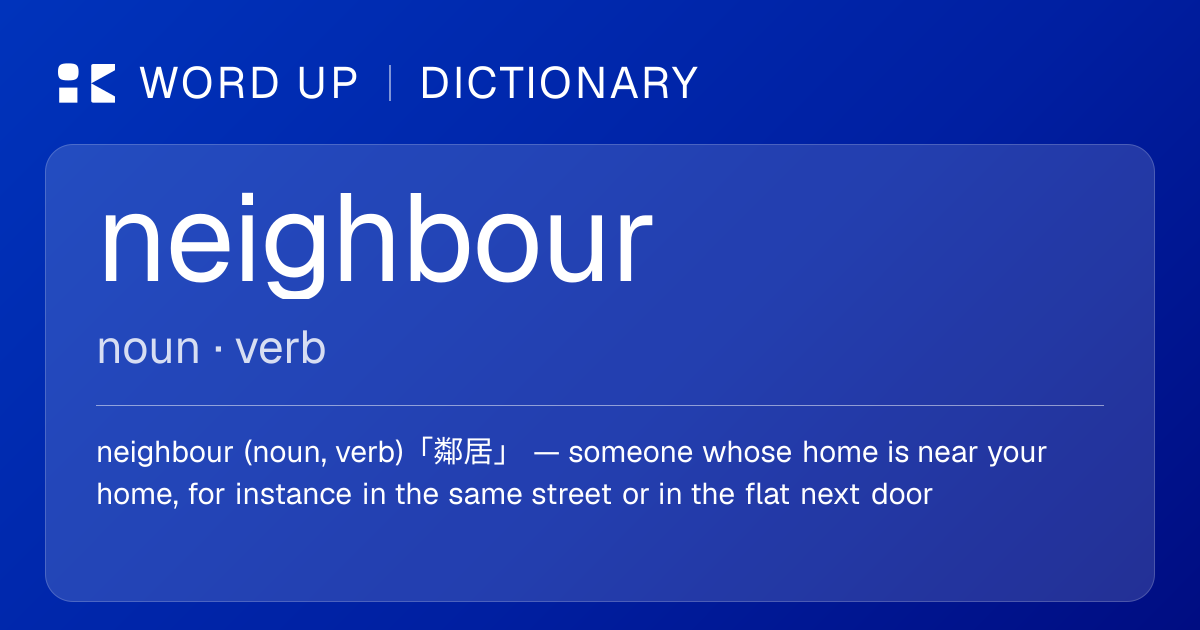
G.K. Chesterton (English writer of the early 20th century and creator of the ‘Father Brown’ stories) said that ‘the Bible tells us to love our neighbours, and also to love our enemies; probably because they are generally the same people.’ The word neighbour dates back to at least the end of the 9th century, although its form at that time in Old English was néahghbúr (I’m using gh to stand for the obsolete letter ‘yogh’). This is composed of two elements: néah (nigh, close to) and ghbúr (dweller, farmer, countryman).
The first, néah, is interesting for two other words it has given us in English, apart from nigh. The comparative form was néar, providing the modern English word near. The superlative form was néahst, giving us next. As the words developed separately, nigh got new comparative and superlative forms (nigher and nighest) and found what was probably its greatest fame by appearing on placards and sandwich boards carried by religious types declaring that ‘The End of the World is Nigh’.
The second element, ghbúr, derives from búr (dwelling), from the verb bū (dwell), which also gives us bower (a poetic word for a dwelling, a cottage or a shady tree-covered spot) and boor (peasant, rude, unmannered person).
Neighbours dwell in a neighbourhood. The suffix –hood was in Old English an independent word in its own right (hád) with a range of meanings, including ‘person, condition, quality, rank’. Combined with other nouns, it gave cildhád (childhood) and préosthád (priesthood), for example. It survived as a suffix after it ceased to exist as a separate word and was used to create words like brotherhood, motherhood and neighbourhood. Interestingly, this suffix is enjoying something of an independent life again in America where hood is used by some people to mean neighbourhood.
Talking of Americans, neighbour is one of those words that they spell differently from us Brits, like colour and flavour. What did they do with our u? Next month’s column will attempt to solve the mystery.