At a time of major change in Greek education, the introduction of the International Baccalaureate (IB) Diploma Programme in public schools has sparked new discussions about how we teach, how students learn, and what the classroom should look like today. At the heart of this shift there are experienced teachers who are not just adjusting to change, but actively helping to shape it.
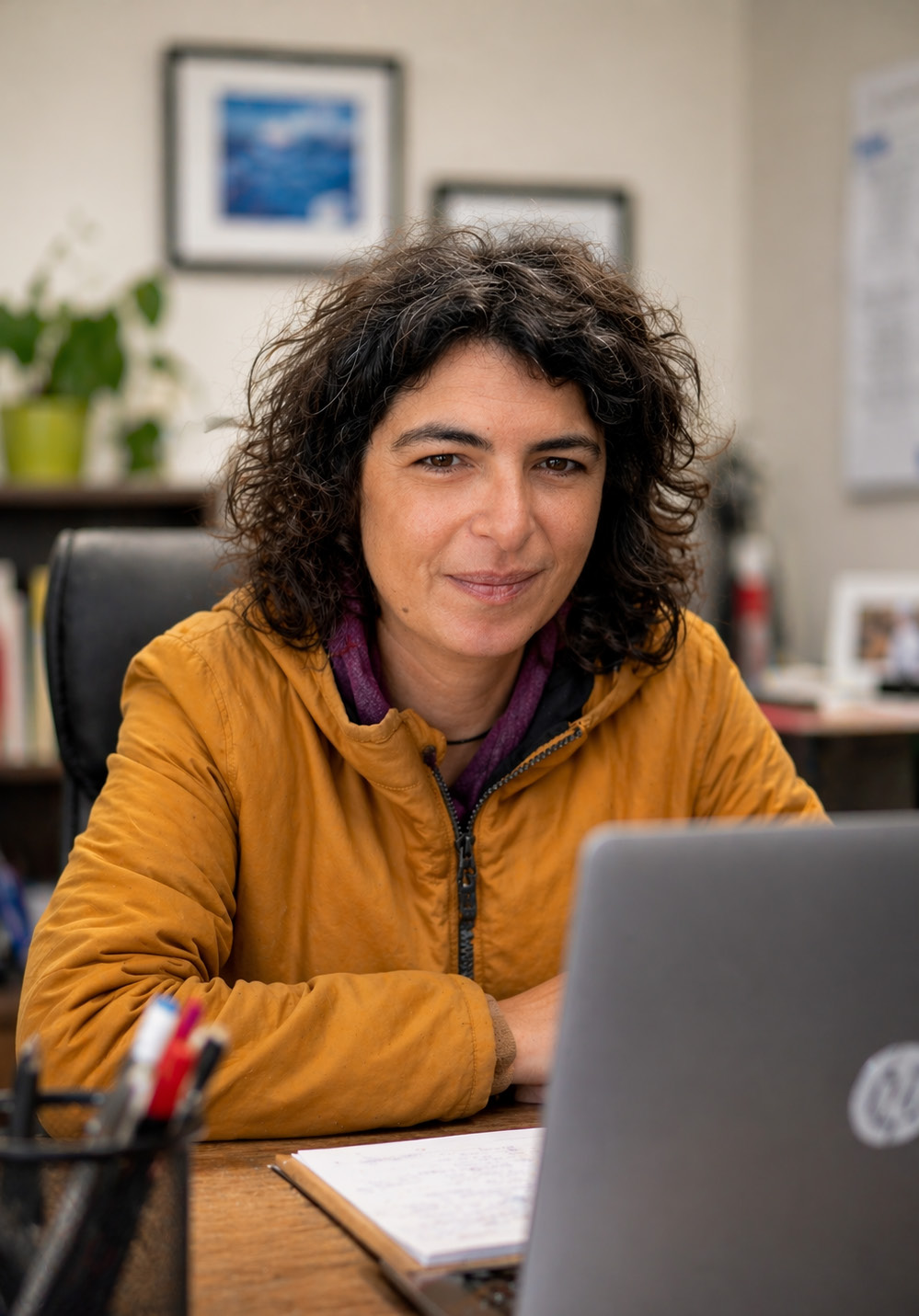
One of them is Stella Volyraki. Stella holds a degree in English Language and Literature from the Aristotle University of Thessaloniki, as well as a Master’s in English Language Teaching from the Hellenic Open University. With more than twenty-five years of experience in public education, she currently teaches at Anavryta Model Lyceum. Alongside her classroom work, she has been deeply involved in teacher training, especially in the use of new technologies and eTwinning projects and is also a certified IB educator.
In this interview, she shares her journey into the IB programme, reflecting on both the challenges and opportunities it brings to English Language Teaching in Greece. She also explores the broader shift in mindset it requires from both teachers and students. Drawing on her experience, she offers thoughtful insights into what it really means to move beyond teaching English as a subject and instead use it as a tool for thinking, inquiry, and meaningful learning.
How did you become involved with the IB programme in Greece? Was it a voluntary decision?
I became involved with the IB programme in Greece when my school, AML – Anavryta Model Lyceum- entered the national process for introducing the Diploma Programme into public schools. It was not something that happened automatically. Teachers had to go through a formal application procedure, which included submitting a CV, preparing a lesson plan in English and recording a short video. Because I had already been teaching at a school selected for implementation, I was in a strong position to be considered, since the official framework gave priority to teachers already serving in the relevant schools.
At the same time, I still see my involvement as a voluntary professional choice. Very early on, I understood that this was not simply a new syllabus or an extra qualification to add to one’s career profile. It was a different philosophy of teaching and learning, and that is what made me want to commit to it personally and professionally.
What attracted me most was that sense of educational seriousness. The IB seemed to ask deeper questions about what learning is for, what kind of classroom culture we want to build, and what kind of young people we want students to become. So, although my involvement began through a formal application process, it quickly became something much more personal: a conscious commitment to a way of teaching that I found both challenging and meaningful.
At what point did you realise it requires a fundamentally different approach to teaching?
I realised it almost immediately, when I was preparing the lesson plan required for the application. That was the moment I understood that this was not simply a more demanding curriculum, but a different educational philosophy. At first glance, one might assume that the IB is simply a strong programme taught in English, with higher academic expectations. But the more closely I worked with it, the clearer it became that it asks teachers to go far beyond content coverage.
It is built around inquiry, conceptual understanding, reflection, collaboration, international-mindedness, and the explicit development of both receptive and productive skills. That was the moment I saw that this was not about adjusting a textbook or making lessons more difficult; it was about rethinking the purpose of the classroom and the kind of learner we want to help students become.
In more traditional settings, teachers often feel pressure to complete the syllabus, deliver content efficiently, and prepare students for exams. Of course, the IB also values rigour and achievement, but it asks for something more integrated. It expects students not only to know things, but to question, connect, interpret, analyse, and reflect. That also means the teacher’s role changes. You are no longer simply transmitting knowledge; you are designing learning experiences that help students build understanding for themselves. For me, that realisation came very early, and it was probably the point at which I understood that becoming involved in the IB would require me to rethink not only what I teach, but how and why I teach.
Many ELT teachers in Greece are trained to teach English as a subject. IB requires English to function as a tool for thinking. What is the biggest misconception teachers have when they first try to make that shift?
I think the biggest misconception is that they believe the shift is mainly about making the language more advanced. In other words, they think the challenge is just to teach better vocabulary, more sophisticated grammar, or more difficult texts. But that is only part of it. In the IB context, English is not just an object of study; it becomes the medium through which students think, argue, research, reflect, and express complex ideas.
So, the real shift is cognitive, not just linguistic. Students need English in order to analyse, justify, compare perspectives, and construct meaning. That means the teacher’s role changes, too. You are not just teaching English as a subject; you are helping students use English as an academic and intellectual tool.
I think this can be difficult at first because many of us were trained within a framework where language teaching was often divided into clear categories: grammar, vocabulary, reading comprehension, writing tasks, and so on. The IB certainly does not ignore those elements, but it places them in a wider context. Language becomes inseparable from learning itself. Students need English not only to answer questions correctly, but to formulate ideas, sustain arguments, reflect on different viewpoints, and communicate with precision and nuance. So, the biggest misconception is assuming that the change is only about level. In reality, it is about function. English is no longer just a subject to be mastered; it is the means through which deeper learning takes place.
In your experience, can a typical Greek ELT classroom realistically transition to this model, or does it require a completely different mindset?
I do think a typical Greek ELT classroom can transition to this model, but it absolutely requires a different mindset. Not a completely different teacher, but a different way of understanding teaching. Many Greek teachers are highly capable and very well trained in language teaching, but they often work within a system that emphasises correctness, exam preparation, and coverage. The IB asks for something broader: more inquiry, more student thinking, more open-ended discussion, more reflection, and more responsibility placed on the learner.
That can feel unfamiliar at first. Students are not always used to this kind of classroom either. They may initially feel less secure when there is no single correct answer or when they are expected to justify their thinking in more depth. So yes, I think the transition is realistic, but only if teachers are willing to move away from a purely transmission-based model and become more comfortable with guiding students through thinking, interpretation, and independent learning.
I would also add that this transition is not about abandoning structure or rigour. On the contrary, it requires a great deal of structure, but of a different kind. It is about planning learning in a way that makes students more active participants. In my experience, Greek classrooms can absolutely make that shift, but it requires patience and support. Teachers need time to adapt their practice, and students, definitely, need time to adapt to new expectations and mindset. So, I would say the transition is realistic, but it works best when teachers see it not as a rejection of what they already know, but as an expansion of it.
What does it actually take — time, cost, commitment — to become an IB teacher in Greece?
It takes much more than attending one workshop. Formal IB training is essential, and in our case we have already received training from experienced IB trainers, which has been a very important starting point. But that is really only the beginning. Teachers need time to study the subject guides, understand assessment criteria, become familiar with the core elements, and gradually rethink their classroom practice in light of the wider IB philosophy. What is often underestimated is the amount of preparation time the programme requires. Because teaching in the IB is closely tied to continuous assessment, feedback, internal deadlines, reflection, and careful monitoring of student progress, preparation is far more demanding than it may appear from the timetable alone. In that sense, the way I see it, one teaching hour in a traditional school setting cannot really be equated with one teaching hour in the IB.
Just as important is collaboration with colleagues. In my view, that is absolutely central. No one becomes an IB teacher in isolation. Teachers need to plan together, discuss expectations, compare approaches, and build a shared understanding of what the programme requires. That collaborative dimension is especially important in a public-school context like Greece, where the IB is being introduced within an existing system rather than in a separate institutional environment.
As for cost, I would not emphasise personal financial cost for training, because in our case the formal training has been covered by the Ministry, and we very much hope that this support will continue. Beyond training, there are also digital platforms and teaching resources available through subscription, which are extremely useful for planning, assessment and classroom support, and we likewise hope that these costs will be covered institutionally by the Ministry. The real cost, however, is more a matter of time, energy, and professional commitment. It requires a serious investment of effort, flexibility, and willingness to keep learning.It also means accepting uncertainty. There is still a great deal that has to be put into place, and I think the first years will inevitably be demanding and require constant adjustment. There will be practical challenges, institutional constraints, and moments when we are still learning by doing. That is normal, especially in a context where the programme is being introduced into public education for the first time on this scale. So above all, becoming an IB teacher requires commitment: the willingness to rethink habits, work closely with others, accept that the process is demanding, and continue developing professionally. In my view, that is what really turns someo